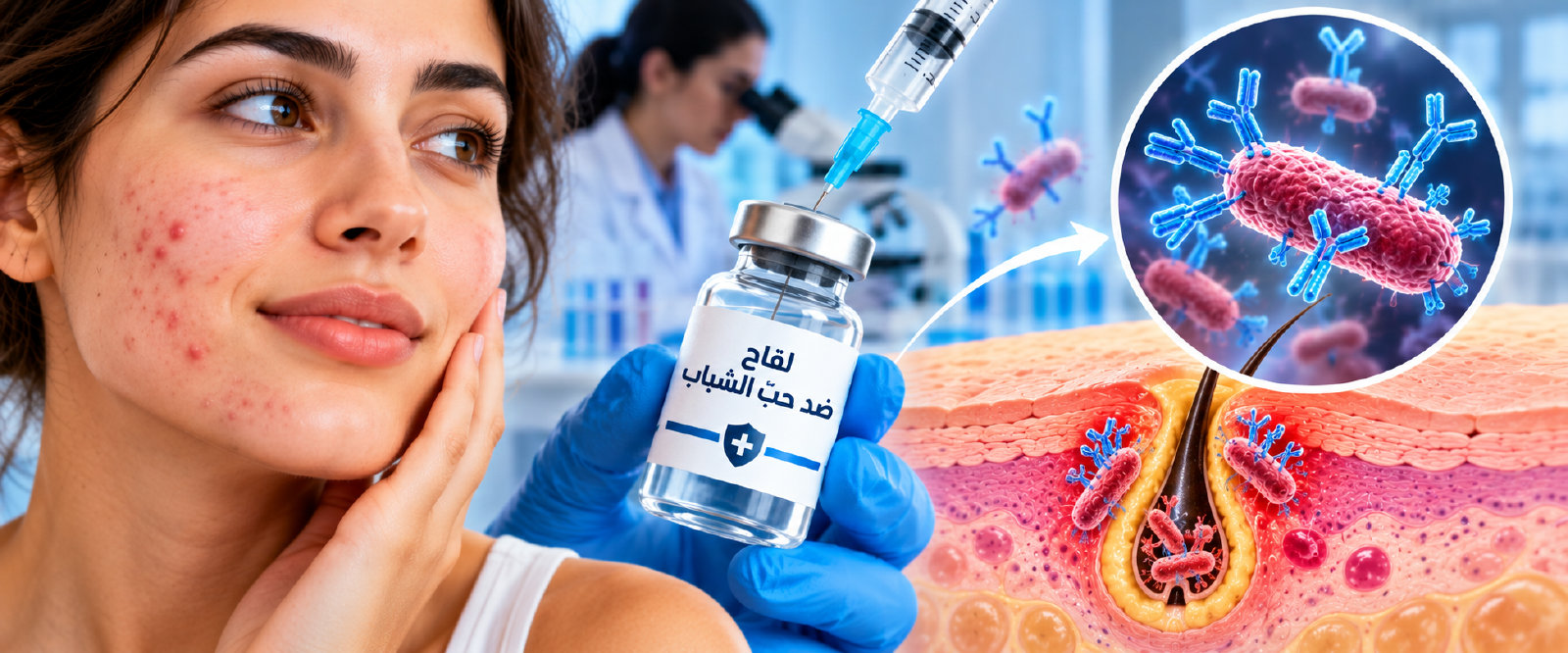
Acne spots are painful and upsetting for teenagers, and for many adults too. The common belief is that acne is a bacterial infection caused by blocked pores, a build-up of sweat and oil, and the growth of germs. But the bacterium behind acne, Cutibacterium acnes, also lives in the pores of people who have no spots at all. For reasons we don't know, some people have a strong immune reaction against these germs while others don't. The new idea is a vaccine against them.
Scientists at the University of California, San Diego ran several studies in mice to understand how acne inflammation works. They looked at how Cutibacterium acnes releases toxins such as the CAMP protein and the enzyme hyaluronidase, which breaks down hyaluronic acid in the skin. The researchers tested vaccines, based on mRNA or on proteins, that make the body produce antibodies.

In the mice, the vaccine against the toxic CAMP protein produced antibodies that blocked the toxin and reduced skin inflammation. The researchers also found that the bacteria make two kinds of hyaluronidase: one breaks hyaluronic acid down into simple sugars and calms inflammation, while the other cuts it into large pieces that make skin cells release inflammatory substances. A vaccine against this second enzyme reduced severe acne inflammation in the mice.
These results offer an alternative to antibiotics, which kill good and bad bacteria alike. Acne medicines such as isotretinoin can also have serious side effects, such as birth defects and very dry skin.
Promising as these lab and animal results are, the vaccines are still at an early stage. Sanofi's human trials have not yet started recruiting volunteers, and we don't yet know whether the vaccines will work as well in people, or whether they will cause serious side effects.

Like

Love

Angry

Dislike