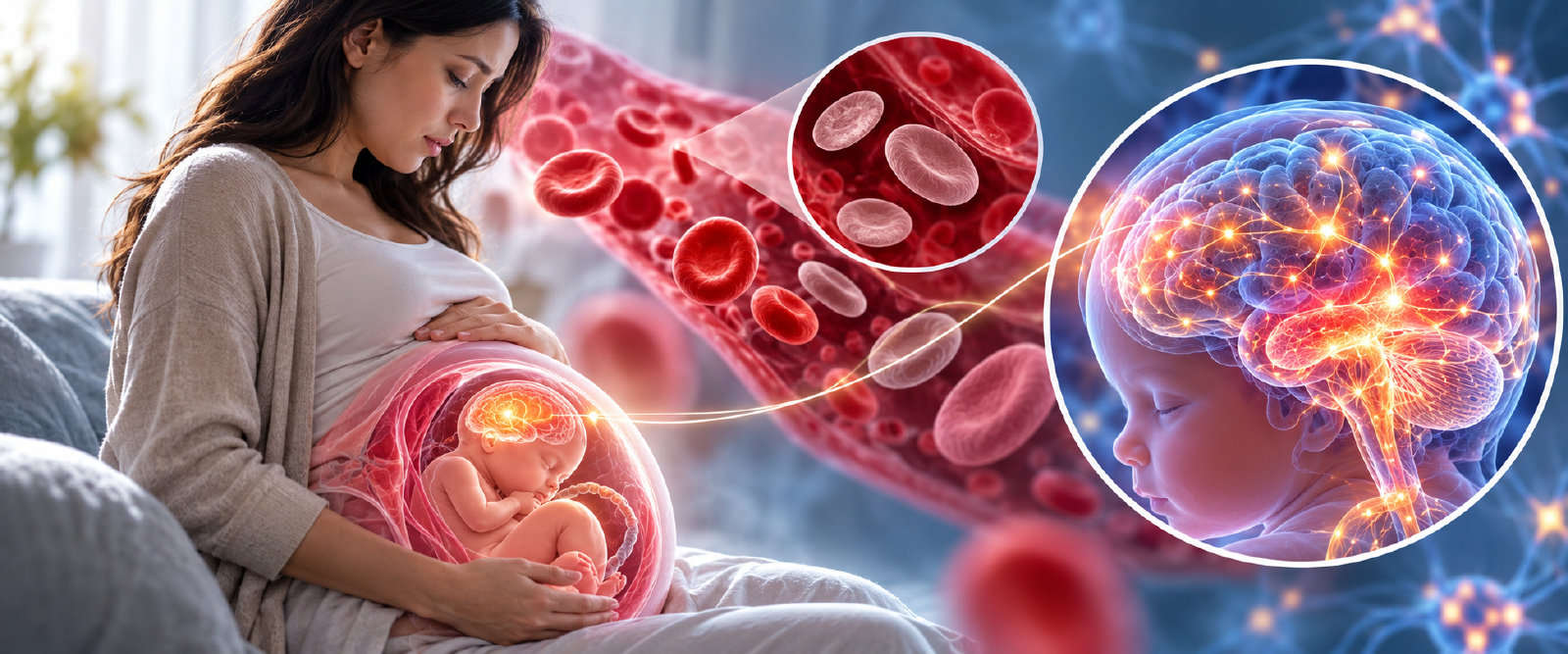
A new study in mice suggests that iron deficiency during pregnancy causes damage to the unborn baby that cannot be reversed. The study was carried out at the University of Rochester School of Medicine & Dentistry in the US and published in The Journal of Nutrition in 2026. The team fed female mice either enough iron or too little, before mating and throughout pregnancy, to study the long-term effects on the offspring's brains. Afterwards, all the pups were given an iron-rich diet to see whether the effects of iron deficiency could be reversed after birth.
Iron levels in the pups' blood returned to normal after the supplements. But iron levels inside the brain tissue stayed disturbed: some brain areas still lacked iron while it built up in others. The scientists also found disturbed levels of other minerals that support growth and cell function, such as calcium and magnesium, and trace metals such as manganese, copper and zinc. These changes came with lasting differences in the insulating sheath around nerve cells (myelin). The activity of genes linked to brain development changed too: some became less active in the cortex, hippocampus and thalamus, while others became more active in the back of the cortex and in areas that process the senses and direct attention.
These results show that normal iron levels in the blood after birth do not necessarily mean the brain has fully recovered. This casts doubt on current clinical tests, which underestimate the lasting effects of iron deficiency in early pregnancy. The study also shows that not all brain areas are affected in the same way: the centres that handle the senses and attention stand out as the main weak points.

Like

Love

Angry

Dislike