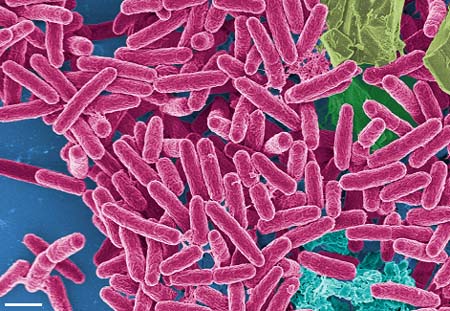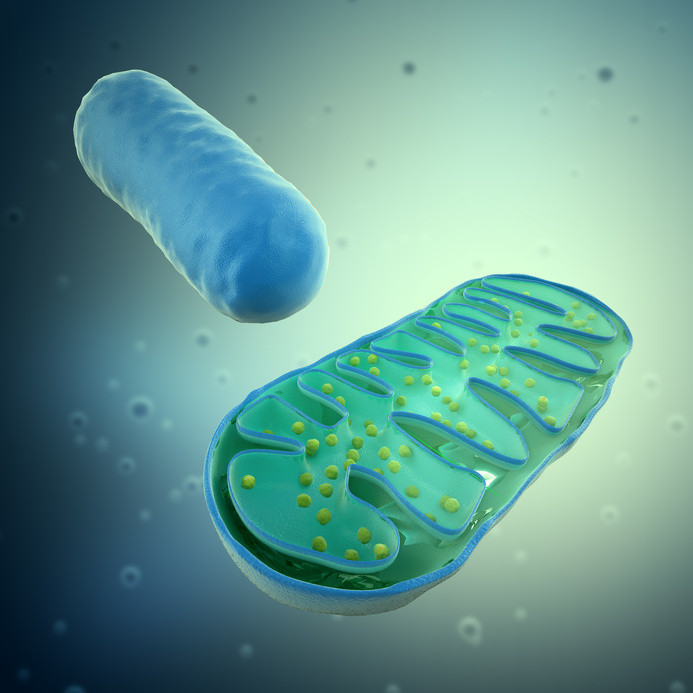
Anyone who has studied biology knows that mitochondria are the power plants of the cell. They form an almost independent system within it, with their own DNA and their own way of making proteins. That led scientists to say that mitochondria were once energy-producing bacteria that were swallowed by cells and put to work, which became the basis of animal and plant life.
A new theory, published in PLoS ONE, says that these forms, which evolved two billion years ago, were a kind of parasite that attacked bacteria and stole their energy molecules, ATP. A mutation later turned them around, so that they pumped energy out instead of taking it in. The study used phylogenomics, an analysis of how the genomes of eukaryotes (organisms with a cell nucleus) and alphaproteobacteria evolved, and reconstructed a hypothetical primitive mitochondrion.
What surprised the scientists was that this ancestor carried parasite genes that took ATP from the host cell and pumped back the spent energy molecule, ADP: the exact opposite of what mitochondria do today in supplying the cell with energy.
The study looked at 427,186 genes from 30 eukaryotes and 4,459 genes from 394 mitochondrial gene families. Only 278 of the 427,186 genes were related to mitochondria and their evolution.
The scientists also found that the primitive mitochondria completely lacked genes for turning sugar and protein into energy, while keeping the genes for turning fat into energy. This contradicts the earlier theory that mitochondria already had a range of functions before they were swallowed and used as generators.
Without mitochondria we would not see the variety of life we see today. In humans they are vital, and faults in them cause many diseases, such as Alzheimer's, Parkinson's and diabetes.

Like

Love

Angry

Dislike