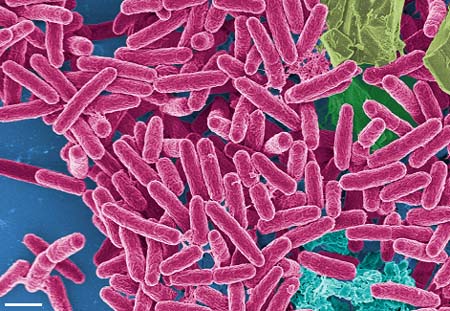
February 2014: a new study from Nagoya University in Japan has used blue-coloured compounds to starve hospital bacteria of iron. Pseudomonas aeruginosa is the most common type of bacteria in hospitals.
These bacteria live naturally on and in the human body without causing disease, but when a person's immunity drops because of another illness, they seize the chance to multiply and cause infection. Worse, they are extremely good at multiplying in harsh conditions; they have even been found growing in containers of strong (phenolic) disinfectants. And because they live in hospitals, they are resistant to almost all antibiotics.
Like humans, these bacteria need a lot of iron to live. They capture it with a protein called HasA, which binds the iron-containing haem. This led the scientists to test metal-binding proteins (metalloproteins), and they found one that stopped Pseudomonas aeruginosa from growing.
After four years of research, the scientists found that the blue pigment phthalocyanine, used to paint Japan's bullet trains and traffic signs, can compete with the iron for the HasA protein because of its molecular shape.
Pseudomonas aeruginosa causes pneumonia and infections of surgical wounds, which need special treatment. The new discovery opens the door to a new kind of treatment that the Japanese scientists recommend exploring. Treatments based on metal-binding compounds still have limited effect, but their effectiveness is improving fast.

Like

Love

Angry

Dislike