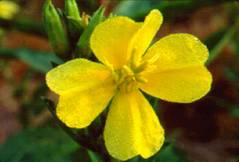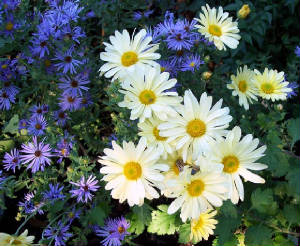
Chrysanthemum flowers are used for skin problems, wounds, varicose veins, ulcers, burns and watery eyes, and as a mild laxative and painkiller. Boiled, the infusion is used for colic, colds, coughs, and complaints of the stomach, digestive system, liver, kidneys and bladder.
Family: Asteraceae. Scientific name: Chrysanthemum morifolium. In folk tradition the name is also given to related plants such as feverfew and wild chamomile, and the flower has been called "Russian penicillin".
It is a perennial herb native to south-eastern Europe and Asia that grows on rocky slopes, walls and waste ground, and is now cultivated in most parts of the world. The flower heads are used once fully open. The plant grows to about one and a half metres and looks rather like chamomile, but it differs in its chemical content and its effects.
Chrysanthemum contains alkaloids, chiefly stachydrine, a volatile oil, sesquiterpene lactones, flavonoids and B vitamins.
The leaves have a fresh, aromatic scent. The plant is edible and medicinal. The ancient Egyptians and Greeks valued it as a remedy for headache, joint pain, stomach ache, period pain and dizziness, and fever. It was also used to bring on menstrual flow. Modern researchers confirm that it is a valuable herbal remedy, especially as a supporting treatment for migraine and rheumatism.
It relaxes the smooth muscle of the womb and helps with painful periods. It promotes menstrual flow and reduces the clumping of blood platelets and excess clotting.
It also aids digestion and improves liver function, and experiments have shown that garden chrysanthemum helps in angina and has antimicrobial effects.
Its main properties are antibacterial, anti-inflammatory, antispasmodic, relieving wind, promoting sweating, diuretic, promoting menstruation, lowering fever, tonic and widening blood vessels. It can be added to a sitz bath, fresh flowers can be rubbed on the skin, and it can be applied as a compress to the head for headache and dizziness.
Chrysanthemum should not be used during pregnancy because it stimulates the womb.
Scientists at King's College London have also said that a related plant, known by its Latin name Vernonia anthelmintica, appears useful in treating psoriasis: its seeds release a chemical that helps treat skin inflammation.
Chrysanthemum flowers are also used against fungal infections and acne and to cleanse the eyes. In India and China, chrysanthemum tea is used for tension headaches: a medium spoonful of dried flowers is boiled in a cup of water for 10 minutes, strained and drunk two or three times a day.
By pharmacist Reem Nour al-Din Ali

Like

Love

Angry

Dislike