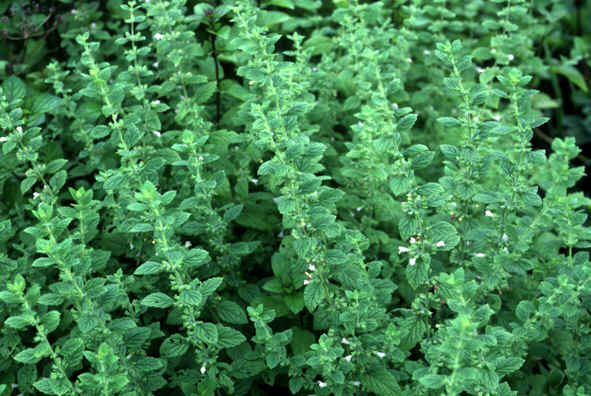
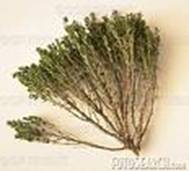
Thyme (Thymus vulgaris) belongs to the mint family (Lamiaceae). It is a low, creeping perennial herb that grows wild in fields and in gardens. It reaches about 40 cm, with woody, much-branched stems and a taproot. The small, oval leaves (4–8 mm long and 3–4 mm wide) grow almost directly from the stem in opposite pairs and, like the stem, are covered in short white hairs. It is fragrant, with pale purple flowers in rounded spikes at the tips of the stems.
Thyme grows in dry, mild regions of the Mediterranean. It is gathered in September and October and sold by herbalists, and is used widely in Mediterranean countries in food and remedies; most homes have it.
Its two main active substances are thymol and carvacrol, which act as preservatives and antibacterials and aid digestion.
Parts used
The flowers, fruit and dried green leaves.
Constituents
Essential oil (about 5%, containing phenols such as thymol and carvacrol, and terpenes), B vitamins, vitamin C, tannins, gum, iron, silicon and triterpenic acids.
Traditional uses
Thyme is traditionally used to relieve wind, fever, headache and catarrh, and is a strong antiseptic. It is used for coughs, whooping cough, asthma and other breathing complaints, helping loosen phlegm and soothe the airways, and to relax the digestive tract and ease digestion and cramps, including period pain. Thymol, the volatile oil distilled from the leaves, is a deodorant and antiseptic used in mouthwashes and for toothache.
- Tea: put two teaspoons of dried thyme in a cup of boiling water, leave for 10 minutes, and drink up to 3 cups a day for coughs or period pain.
- Wounds: fresh thyme leaves have been placed on a cleaned wound and covered with gauze; a clean dressing and medical care are safer for anything more than a small cut.
Caution: thyme essential oil should never be swallowed: it can cause poisoning, with headache, vomiting, nausea, tiredness and effects on the heart, breathing and thyroid. People with thyroid problems should use only small amounts of thyme, and pregnant women shouldn't use it in medicinal doses. Thyme as a food seasoning is safe; it doesn't replace treatment for asthma, whooping cough or ulcers.
By Dr Elias Jabbour

Like

Love

Angry

Dislike