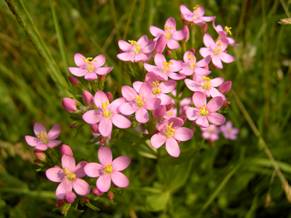
Latin name: Centaurium erythraea, of the gentian family (Gentianaceae)
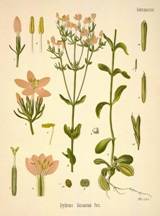
A wild herb of sandy ground, woods and light scrub, 20 to 40 cm tall, with an upright, square stem branching at the top, narrow oval leaves growing straight from the stem in opposite pairs, and star-shaped pink flowers from July to September. It has long been used against worms.
Part used
Everything above ground of the flowering plant.
Active substances
Bitter substances that act as a tonic and stimulate appetite and digestive secretions.
Traditional uses
- Poor appetite, a weak stomach and disturbed stomach acid, such as heartburn.
- Liver and spleen complaints and low mood.
- Summer diarrhoea, especially with nausea and vomiting.
- Anaemia.
- Externally, powder sprinkled twice a day on chronic sores.
How to prepare: soak 1 teaspoon in a cup of cold water for 6 to 8 hours, strain and drink cold through the day in several doses. As it is very bitter, the powder (2 g a day mixed with a little honey) may be easier.
Note: these are traditional uses, and most have not been proven by research. Talk to your doctor or pharmacist before using herbs as medicine, especially if you are pregnant or breastfeeding, have a long-term illness or take other medicines.
By Dr Elias Jabbour

Like

Love

Angry

Dislike