Latin name: Melissa officinalis, of the mint family (Lamiaceae)
A perennial medicinal herb, from leafy plant to small shrub, which may stay green all year depending on where it grows. In the Levant it grows wild in damp ground near water, and in fertile, sunny land. It is also cultivated as a kitchen herb. It loses its properties if stored for more than a year.
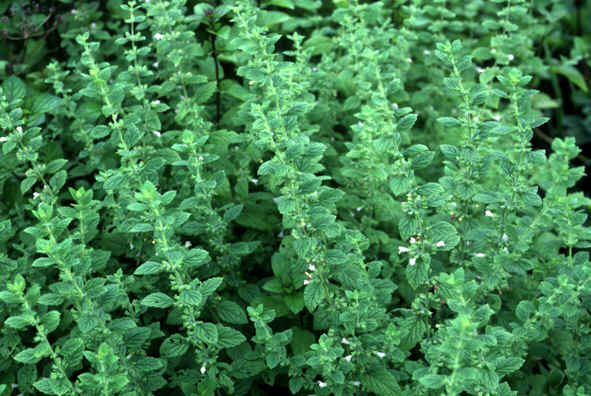
It grows 30 to 100 cm tall, with roots that spread underground and send up upright shoots. The stem is square and branched; the leaves are long, oval, toothed and opposite, with a pleasant lemony scent and a bitter, astringent, appetising taste.
The small flowers are white, crimson or pale yellow and grow next to the leaves. The fruit splits into four small nutlets. It is grown from cuttings, by dividing the roots or from seed.
Parts used
Only the young leaves, once dried, and the herb before it flowers. Crushed between the fingers, the leaves smell of lemon, which makes them easy to recognise.
What it contains
Volatile oils, including geraniol, citronellal and citral, as well as tannins, bitter substances, green pigment and limonene.
Active substances
A volatile oil with citral, bitter substances, and substances said to ease spasms, relieve wind and promote sweating.
Medical uses
The leaves and young shoots are used as food, fresh or dried like a spice, picked before the flowers open. The leaves are also used for general weakness, palpitations and as a calming remedy for nervousness and tension.
The oil is used to relieve spasms, wind and colic (stomach and gut cramps) and to help digestion. It is also used for headaches and rheumatism. Lemon balm is widely used in perfumes and cosmetics.
External use
For rheumatic pain, nerve pain in the teeth and ears, headaches and nervous palpitations, fresh leaves are placed over the painful spot or over the heart. Dry leaves are moistened with a little rose water first.
Internal use
An infusion of the leaves is used for nervous complaints, such as anxiety, insomnia, dizziness, fainting and palpitations. To make it, use 1 teaspoon of fresh or dried leaves per cup of boiling water, and drink up to 2 cups a day. It can be drunk like tea, and a decoction is taken for colic.
In the kitchen
Lemon balm tastes like lemon with a slight bitterness. It isn't cooked but used fresh: it seasons salads, vegetable soups, sauces and butter, carrots and celery, sweet fruit compotes and pickling vinegar. It is an excellent seasoning for special diets, can replace a squeeze of lemon, and can be dried and stored. It whets the appetite and helps digestion.
By Dr Elias Jabbour

Like

Love

Angry

Dislike