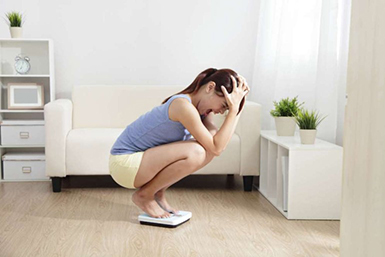
New research sheds light on genes and jeans sizes.
Your mother's body does not seal your fate
Studies suggest that genes determine 80 percent of your weight and body shape, but environment and personal choices also play an important role, so you will not necessarily look like your mother in middle age. Your mother grew up in a world where women did not work up a sweat, while you live in a world of sport and food delivery services, and researchers say that can make a difference. So it is worth knowing which factors are in play and which you can control.
The evidence
A 1990 study of identical twins suggested that genes determine body shape and size in adulthood, but new research gives a more precise picture: some aspects of shape and size turn out to be more genetic than others. How easily you build muscle, for example, is highly inherited. A study published in the International Journal of Obesity found that while everyone needs exercise to build muscle, people who inherited muscle need less of it.
Another finding is that an apple-shaped body is more strongly linked to genes than a pear-shaped or slim one. Some speculate that this is because you also get genes from your father, and men usually put on weight around the belly. So if your mother carries extra weight around her middle, you may become apple-shaped too. Medically this is a concern, because fat around the middle is linked to diseases such as type 2 diabetes and coronary artery disease.
"You inherit half your genes from your mother and half from your father, so you are a mix. You may be unlucky and inherit the worst combination of both, or lucky and inherit the best," as one Harvard professor put it.
A new study has found a gene that affects how much we eat. Neurexin 3, one of the genes linked to waist size, is involved in brain processes and linked to addictions such as alcoholism. Scientists believe this gene, carried by 20 percent of people, may drive overeating, which would explain why obesity runs in families with the same body shape.
"Given how many factors affect obesity, it is interesting that the study points to the brain," says Kari North, PhD, of the University of North Carolina. "Because this gene is linked to addiction, we should look at weight gain in that light too."
Unfortunately, the genes that set your shape can be stubborn. Even disciplined dieters can be frustrated when, after losing the first few pounds, the weight comes back. Researchers believe this is because everyone has a genetically influenced set point, a weight the body naturally wants to be. If you drop about 10 percent below it, your body fights back.
"The more weight you lose, the harder your body works to make up for it," says David Cummings, MD, professor of medicine at the University of Washington. "You get hungrier, your metabolism becomes more efficient, and you increasingly crave food, which is very hard to resist."
These findings are compelling, but they do not tell the whole story. "Environment and personal choices can affect body shape," says North.
One simple explanation, says Cummings, is the calorie-rich food of our culture. "Hundreds of years ago, many people did not get much food, so only those with a very high tendency to gain weight became obese." Today, for a few dollars, even someone with thin genes can buy enough food to grow. "We live in an environment our genes were not designed for," Cummings says.
But perhaps the most important factor is fitness. Women in their twenties and thirties who played sport as children often have less "feminine" bodies than women of the same age 25 years ago: wider waists, narrower hips, muscular legs and defined arms, the result of years of sport.
In the United States, Title IX, a law passed in 1972, gave girls the same sporting opportunities as boys. "Women in their thirties and forties are the first generation to benefit from Title IX, and many of them have bodies that look different from their mothers'," notes Cassandra Forsythe. "When you build a lot of muscle as a teenager, testosterone levels are higher, which is why the waist is wider and more boyish. You do not see many 23-inch waists these days." Exercise also limits fat around the hips, where women usually store it, which explains the narrower hips.
You cannot override your genetic tendency, but building muscle can reshape your body enough to delay the point at which your figure starts to spread, according to Forsythe. Muscle mass does start to decline at menopause, so in the end your body wants to return to its set point. The glass-half-full view is that hard work can keep your body as it is for longer, and if you stay active into your fifties, you will weigh less than someone who did not.
The fear factor
For some women, their mother's shape still hangs over them like a dark cloud.
"When we talk with patients who have body image issues or eating disorders, women often have very specific feelings and worries about their mothers' bodies," says clinical psychologist Sherry Dlinsky. "A woman who has never been overweight can become obsessed with gaining weight because she is afraid of inheriting her mother's body."
In fact, daughters who are not as slim as their mothers may feel inadequate. "There is a lot of competition between mothers and daughters in general, and it often shows itself in weight and size" because of its cultural importance.
Winning the genetic war
Despite all the new research on body shapes, "no matter what your genes or your environment, you cannot gain weight unless you eat more calories than you burn." In other words, you may not be able to stop being apple-shaped, but you can certainly be healthy.

Like

Love

Angry

Dislike