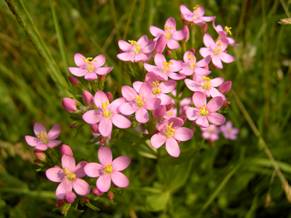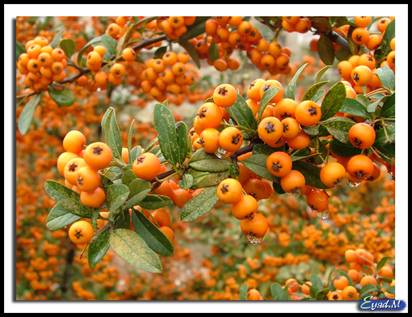
Hawthorn (Crataegus oxyacantha) belongs to the rose family and is native to the Mediterranean region. It is a medium-sized, thorny, deciduous wild tree, 3–5 m tall, growing in woodland, with hard branches ending in sharp thorns.
Its leaves are small, glossy and green, 2.5–6 cm long, lobed (3 to 7 lobes) and toothed. Fragrant white or pink flowers grow in clusters in May and June. The fruits are round or oval, red or yellow, up to 1 cm long, with a hard stone.
Parts used
The leaves, the flowering tops and the fruit.
Constituents
Flavonoids, oligomeric procyanidins, anthocyanins, choline, citric, tartaric and crataegolic acids, saponins, sugars, pectin, vitamin C and B vitamins. The seeds contain amygdalin.
Traditional uses
Hawthorn is traditionally regarded as a heart tonic: it is said to widen the coronary arteries and improve blood flow to the heart, steady the heartbeat, lower blood pressure, and calm the nerves, easing insomnia and dizziness. It has been used for palpitations, hardening of the arteries, tinnitus, menopausal symptoms, nervousness and diarrhoea. Some clinical trials suggest hawthorn extract may modestly improve symptoms in mild heart failure, but it doesn't reduce deaths.
- Internal: an infusion of 15 g of flowers or leaves in a litre of water, three cups a day.
- External: an infusion of 20 g of flowers or leaves in half a litre of water is used as a gargle for sore throats and tonsillitis, and as a lotion or compress.
Caution: hawthorn can strengthen the effect of heart medicines such as digoxin, beta-blockers and nitrates, and of blood pressure drugs. Anyone with heart disease must talk to their doctor before using it and must never use it in place of prescribed treatment. Avoid it in pregnancy and breastfeeding.
By Dr Elias Jabbour

Like

Love

Angry

Dislike