Latin name: Urtica dioica
A herb of the nettle family. Its stinging hairs break off in the skin when touched and release a burning juice that hurts the hand. The plant grows almost everywhere, especially near places where animals urinate.
It is a perennial herb found in many countries, originally from Asia and Europe. There are two kinds: the small nettle, about 50 cm tall, and the large nettle, about 1 m tall.
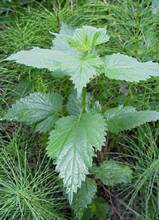
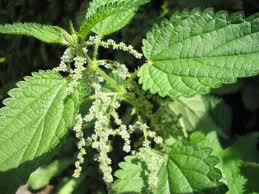
The stem is square and upright, up to about 1 m tall, with opposite, oval, heart-shaped leaves with toothed edges. Leaves and stem are covered with fine stinging hairs that hurt and itch. The small greenish or yellowish flowers hang in clusters and bloom from July to September.
Parts used
The whole herb, roots included, from early July to early September: leaves, roots and seeds. If only the roots are wanted, they should be dug up around flowering time.
Active substances
The plant, especially the leaves and stinging hairs, contains choline, acetylcholine, histamine, formic acid, vitamins A, B2, C and K, chlorophyll, carotenoids, a volatile oil, mucilage, tannins, minerals (mainly potassium, calcium and iron), many enzymes and salicylic acid.
Nettle contains a good amount of iron, which red blood cells need, and it is very rich in vitamin A and in mineral salts such as sodium, potassium and calcium. That is one reason poultry eat it so greedily.
Older herbal books also claimed that the chlorophyll in nettle disinfects wounds where penicillin fails, cures anaemia, lowers blood pressure and calms the nerves. There is no good evidence for these claims.
Medical uses
Nettle is a mild diuretic and helps the body get rid of uric acid. It stimulates the digestive juices (bile, intestinal and pancreatic secretions), and its tannins are sometimes used against diarrhoea.
A decoction of the plant is used as a deodorising rinse and a hair tonic, as it reduces excess oil from the skin's glands. Nettle is also used for rheumatism and an enlarged prostate, for anaemia, and alongside other remedies for diabetes, haemorrhoids and skin rashes. Older people take the seeds as a general tonic.
External use
- Nosebleeds: soak a piece of cotton wool in nettle juice and plug the bleeding nostril with it.
- Mild (first-degree) burns, where the skin is only red: compresses of 1 teaspoon of nettle tincture diluted in 1 tablespoon of warm water.
- Hair loss: rub nettle vinegar into the scalp daily with a cloth. To make it, boil 200 g of chopped herb in 1 litre of water and half a litre of vinegar for half an hour, strain and bottle.
Internal use
- The young, tender parts can be eaten in salad, or crushed and juiced.
- Tea: 2 teaspoons of dried leaves and roots in a glass of hot water, left to steep for 10 minutes; up to 2 cups a day.
- Root decoction: 1 tablespoon of chopped root in 2 cups of water, boiled for 10 minutes. It increases urine more than the leaf tea does.
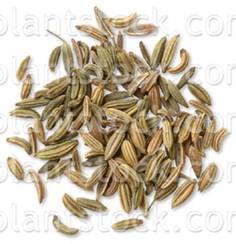
- An infusion of the seeds (1 teaspoon per cup of water) is used traditionally for diarrhoea.
Traditionally, nettle has also been used for gout, kidney gravel, itchy skin conditions such as eczema, and to increase breast milk.
Caution: too much nettle can be harmful. Nettle does not replace medical treatment: bleeding, anaemia, diabetes and prostate problems need a doctor.
By Dr Elias Jabbour

Like

Love

Angry

Dislike