Latin name: Cichorium intybus, of the daisy family (Asteraceae)
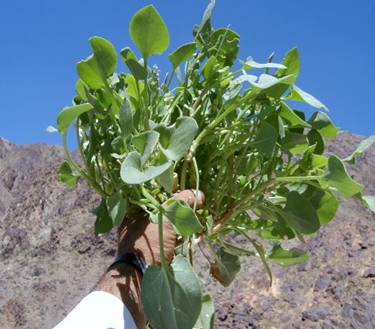
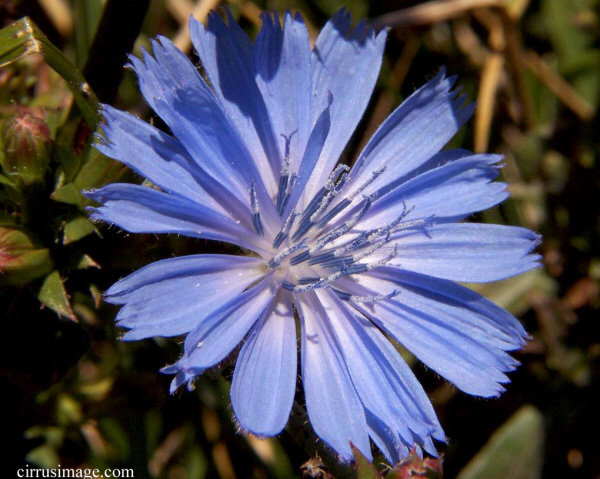
A herb 35 to 100 cm tall, with wild and cultivated varieties, growing by roadsides and on waste ground. It has a thick taproot, a hairy, hollow, sparsely leaved stem, rough, deeply toothed basal leaves in a rosette, and sky-blue flowers from June to July (they open by day and close at night).
Parts used
The whole flowering herb (June to September), dried; the roots (in spring and autumn); and the leaves.
What it contains
The roots contain up to 49% inulin and the bitter glycoside intybin, as well as tannins, minerals (iron, calcium, potassium, phosphorus, sodium, manganese and copper) and vitamins.
Uses
Chicory whets the appetite, stimulates bile, aids digestion, is a mild laxative and diuretic, and is considered a general tonic. It is eaten in salads for its bitterness, and the roasted, ground roots make a coffee substitute (50 g per litre of water), traditionally drunk morning and evening to increase bile.
- Externally: compresses of a decoction (1 teaspoon of powdered root in a glass of water) for skin inflammation and eczema.
- Internally: an infusion of 20 g of dried leaves and flowers in 2 cups of boiling water, drunk in several doses through the day, for poor appetite, constipation, sluggish digestion and fluid retention; fresh root juice in spring, 3 teaspoons a day in milk, for haemorrhoids.
- Traditionally used for the liver, gallbladder and kidneys.
Caution: jaundice, gallstones and kidney disease need a doctor. Don't put homemade preparations in the eyes.
Note: these are traditional uses, and most have not been proven by research. Talk to your doctor or pharmacist before using herbs as medicine, especially if you are pregnant or breastfeeding, have a long-term illness or take other medicines.
By Dr Elias Jabbour

Like

Love

Angry

Dislike