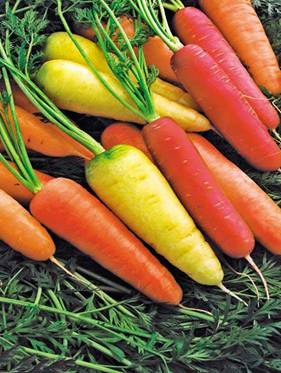
Latin name: Daucus carota, of the carrot family (Apiaceae)
The carrot is one of the richest plants in carotene, which the body turns into vitamin A, which nourishes our skin. That is why carrot goes into many creams and face masks, and why eating carrots helps keep the skin supple and smooth. For a carrot mask, boil carrots in water, mash them well and use when cool.
Part used
The root.
What it contains
Minerals (sodium, potassium, calcium, magnesium and iron) and many vitamins. Cooked carrot is recommended, because cooking releases more carotene. The active substances include vitamins, a volatile oil and pectin.
Benefits
- Helps with diarrhoea in children.
- Its carotene supports eyesight and may help protect the heart and arteries, especially when cooked.
- Its fibre helps prevent constipation and keeps the colon healthy.
- Eaten daily, it may help lower cholesterol.
Traditional uses
- Nappy rash and chafed skin in children: a poultice of freshly grated carrot.
- Coughs in children: carrot syrup, made by boiling carrot juice with sugar.
- Diarrhoea in children: grated carrot every day. For babies, carrot soup: cut half a kilo of carrots into small cubes, cook in water for an hour and a quarter, press through a fine sieve, add boiled water to make up a litre, add 3 g of salt and mix well.
- Threadworms in children: a fresh carrot three times a day for three weeks.
A baby with diarrhoea who seems unwell, refuses feeds or has few wet nappies needs a doctor, not only home remedies.
Note: these are traditional uses, and most have not been proven by research. Talk to your doctor or pharmacist before using herbs as medicine, especially if you are pregnant or breastfeeding, have a long-term illness or take other medicines.
By Dr Elias Jabbour

Like

Love

Angry

Dislike