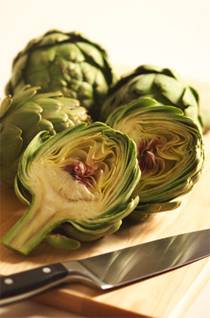
Native to North Africa, where it grows wild in the desert, the artichoke is an important vegetable that has been grown in southern Europe for 2,000 years. Galen wrote that its root, boiled, increases urine a lot, and al-Razi said it increases urine more than asparagus and helps asthma and cough when boiled.
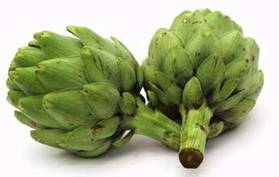
The flower bud is eaten before it opens: the fleshy bases of the bracts and the thick, fleshy heart. It contains vitamins A and B, and most of its carbohydrate is inulin, which breaks down into fruit sugar (fructose). This makes it a suitable vegetable for people with diabetes, liver complaints and constipation.
Uses
Artichoke has long been used for the liver and gallbladder: its active substance, cynarin, stimulates the flow of bile, and studies suggest artichoke leaf extract may help indigestion and lower cholesterol a little. Leaf tea is made with 10 to 30 g per litre of water. It is low in calories and used in slimming diets, and easy to digest.
Traditionally it was also considered to loosen phlegm and stir desire.
Caution: people allergic to plants of the daisy family (such as ragweed and chrysanthemum) may react to artichoke, and people with gallstones should ask a doctor first. Hepatitis and other liver diseases need medical treatment.
Note: these are traditional uses, and most have not been proven by research. Talk to your doctor or pharmacist before using herbs as medicine, especially if you are pregnant or breastfeeding, have a long-term illness or take other medicines.
By Dr Elias Jabbour

Like

Love

Angry

Dislike