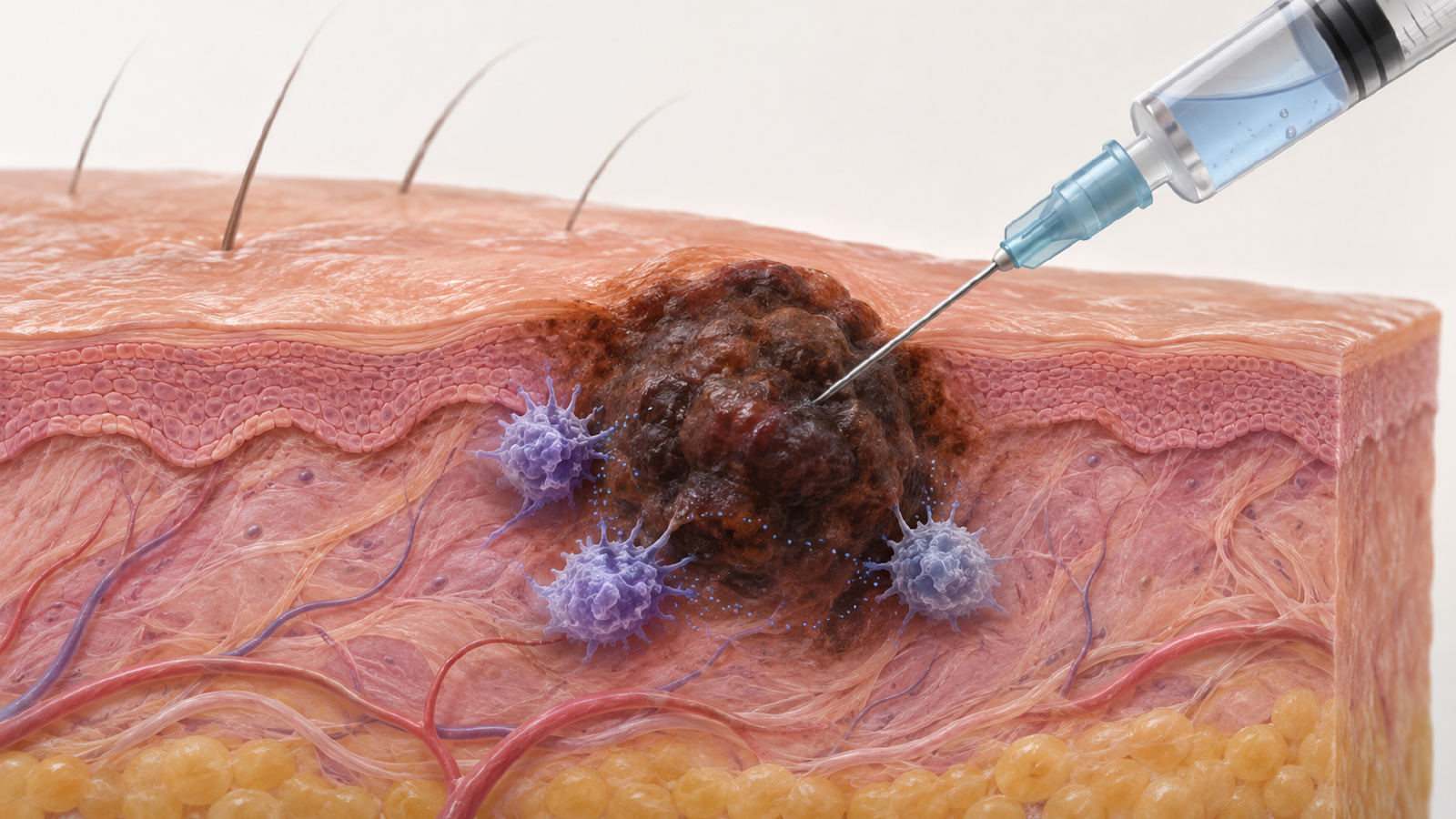
An early-stage clinical trial involving 18 patients with melanoma showed signs of tumour shrinkage in 7 of them, after the flu vaccine was injected directly into the tumours. The idea is to stimulate the immune system to attack cancer cells using a vaccine that has been known and available for years; however, the effectiveness of this method in treating cancer has not yet been proven.
Researchers from the Wexner Medical Centre at Ohio State University in the US conducted the trial, the results of which were presented at a conference on immunotherapy for cancer in Phoenix, USA, in 2026. The trial involved 18 melanoma patients whose tumours were suitable for surgical removal. The participants first received the standard flu vaccine in their arm, and then their tumours were injected with the same vaccine two days later. The injection was repeated after 12 days. For most patients, the dose injected into the tumour was approximately three times the standard vaccine dose. Two weeks after the second injection, the doctors removed the tumours.
The results showed signs of tumour shrinkage in 7 out of 18 patients. Doctors found no remaining cancer cells in the resected tumours of 3 patients. Samples from most of the tumours revealed large numbers of immune cells and immune system activity. No serious side effects were recorded during the trial.
Researchers believe that the flu vaccine triggers an immune response within the tumour, attracting immune cells that are normally kept away by signals emitted by the cancer cells. Some immune cells capture fragments of the damaged cancer cells, helping the body’s defences to recognise and attack the cancer.
Despite the encouraging results, the trial does not prove that the vaccine causes tumours to shrink. The trial is small in scale and there is no control group that did not receive the injection for comparison. Furthermore, we do not yet know whether the effect is long-lasting or prevents the cancer from returning. This method is limited to tumours that can be reached with a needle. It is worth noting that there have been similar immunotherapies that initially showed promising results but subsequently failed in larger trials.
Translated with DeepL.com (free version)

Like

Love

Angry

Dislike