About red blood cells
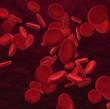
A red blood cell is a disc-shaped cell with no nucleus, made mainly of haemoglobin. It lives 100 to 120 days, and when it dies it is cleared away in the liver and spleen. It is about 60% water and 40% haemoglobin and other organic, mineral and protein substances.
Haemoglobin carries oxygen from the lungs to the organs and carbon dioxide from the organs back to the lungs.
Red blood cells store no glycogen or other sugar reserve: they get their energy by breaking down the glucose circulating in the blood. About 90% of it goes through the main energy pathway (glycolysis), which produces energy and keeps haemoglobin in its working form, able to carry oxygen. The other 10% goes through a side pathway (the pentose phosphate pathway), which makes five-carbon sugars and keeps up the supply of NADPH, a helper molecule the cell needs to protect itself from oxidation. The first step of this pathway needs the enzyme glucose-6-phosphate dehydrogenase (G6PD).
Favism = G6PD deficiency
Favism is a haemolytic anaemia (anaemia caused by the breakdown of red blood cells) due to a problem inside the red cell itself.
G6PD provides the energy and the "reducing power" that protect red cells from oxidation, keeping their haemoglobin in its active form. When the enzyme is lacking, damaged haemoglobin can't be restored. It clumps into small particles at the edge of the cell, called Heinz bodies, and the cell's other functions weaken until it breaks down.
The deficiency is inherited on the X chromosome, which explains why it is much more common in males (XY) than females (XX): in females, a healthy gene on the second X makes up for the faulty one, while males have only one X.
Symptoms
Usually there are no symptoms, because the body doesn't normally meet large amounts of oxidising substances that destroy red cells. Symptoms appear after eating or taking oxidising substances such as fava beans or certain medicines.
They develop 5 to 24 hours after exposure: headache, dizziness, nausea, vomiting, abdominal pain and great tiredness, followed by an attack of haemolysis with fever, a fast heartbeat, pale skin, yellow eyes and red or dark urine. How severe the attack is varies from person to person.
Lab diagnosis
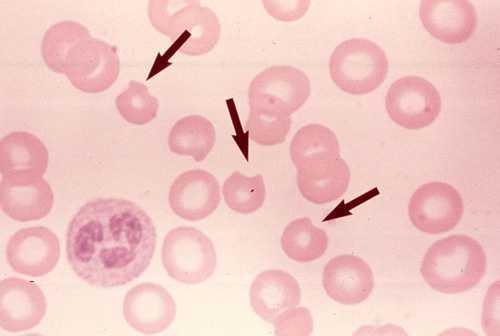
During an attack:
- Changes in the shape of red cells under the microscope.
- Heinz bodies inside red cells (seen after adding an oxidising substance such as phenylhydrazine and staining the blood with brilliant cresyl blue).
- Low haemoglobin.
- A raised reticulocyte (young red cell) count.
- A raised white cell count.
Once the patient is stable: the G6PD enzyme level is measured. It is low and can be close to zero.
Foods to avoid
- Fava (broad) beans, especially fresh green ones, in any form, including cooked beans such as ful medames.
- Breathing in fava bean pollen.
Medicines to avoid (always tell your doctor and pharmacist)
- Some painkillers, such as high-dose aspirin.
- Sulfa drugs, such as sulfasalazine and sulfonamide antibiotics (for example co-trimoxazole, sold as Bactrim).
- Some antimalarials, such as primaquine.
Treatment
- Prevention: avoid the oxidising substances listed above.
- Mild attacks: watching is enough, as the symptoms go away on their own.
- Severe attacks: blood transfusion and fluids are needed, to protect the kidneys from failure.
So before giving any medicine, make sure the patient doesn't have favism. If an attack happens, the family should take the patient to hospital at once.

Like

Love

Angry

Dislike