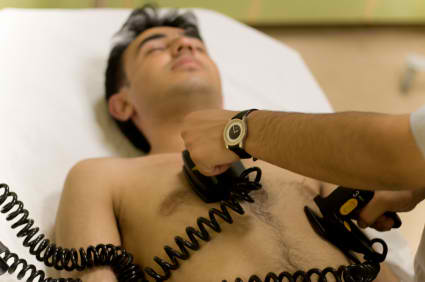
In medicine, brain death means that the brainstem has stopped working along with the rest of the nervous system. A brain-dead patient may still not appear to have died, because machines keep blood flowing through the body. Doctors and religious scholars do not always agree on what this means. We spoke to Dr Mamoun al-Abbar, a neurologist with a diploma in clinical neurophysiology from France and a member of the European Neurological Society.
What is brain death, scientifically?
Brain death, sometimes called clinical death, means damage to the vital centres in the brainstem, so that there is no activity in the brain (cortex) or the brainstem. The breathing centre matters most here: the patient needs a ventilator, which keeps a brain-dead patient alive for a while.
Even though the brain is damaged and has stopped working, the heart and circulation can carry on for days to weeks, sometimes longer, depending on the injury that damaged the brain. During this time tests are done to find out whether death is complete or a passing state after which the breathing centre starts working again. But usually after about a week the heart fails and then stops completely, which means the patient has fully died.
What causes brain death?
- Severe lack of oxygen.
- Strokes.
- Brain tumours.
- Meningitis and encephalitis.
- Head injuries.
- Overdoses of medicines, poisons and drugs.
- Extreme body temperatures.
- Heart and blood vessel damage.
- Liver or kidney failure.
- Hormone disorders.
Brain death must be diagnosed by two doctors, with tests usually 24 hours apart. They include a clinical and neurological examination and establishing the cause of the brain damage, usually with the help of an electroencephalogram (EEG).
How many people die this way?
In the United States, 1 to 2 percent of deaths are brain deaths. The proportion varies between countries depending on living conditions and health care.
Is switching off the machines a mercy?
Brain death raises the question of "mercy killing" or euthanasia: either helping a patient whose brain is destroyed to die, with medicines (active euthanasia), or disconnecting them from life support (passive euthanasia). This is common in Western countries, but in Arab and Muslim countries it remains disputed, to the point of being forbidden. Even organ donation at the stage of brain death, after tissue matching, is still disputed there.
A personal view
Some see death, the inevitable end of all living things, as an obstacle to progress. That view is wrong: without death the balance of nature could not be kept, other species could never evolve, and life could not go on.
The religious debate
Scholars of Islamic law are still divided and have issued contradictory rulings on ending the lives of patients with no hope of recovery.
One group holds that brainstem death is not full death: the other signs of death must appear. They reject "mercy killing" and say doctors must do everything they can to save a patient's life, however hopeless, because human life is a trust to be protected and Islam forbids taking one's own life. Islam commands seeking treatment, and doctors must care for patients with all their effort; the outcome is in God's hands. Even if a patient asks a doctor to end their life, the doctor must refuse. In this view, withdrawing life support from hopeless or comatose patients is killing, and forbidden. These scholars define death as the complete departure of life, when all organs have stopped working entirely, as determined by specialist doctors.
Another group holds that a person whose brain has died is dead in religious law. In their view, when doctors have established that the brain has died and all its functions have stopped irreversibly, but the family insists on keeping the patient on machines for months or years at great expense, the patient is no longer among the sick but among the dead. Continuing treatment with machines is futile and wastes effort, money and time, which Islam forbids, and it harms others by denying them a bed and equipment they need. Removing the machines and leaving the person to their fate is therefore permitted: we have not killed them, only stopped artificial treatment. No scholar, they add, can say that treatment with such machines is a religious duty.
So there is still no settled religious ruling, and the question remains: is it acceptable in Islamic law to remove life support and let the patient rest?

Like

Love

Angry

Dislike