Latin name: Arnica montana
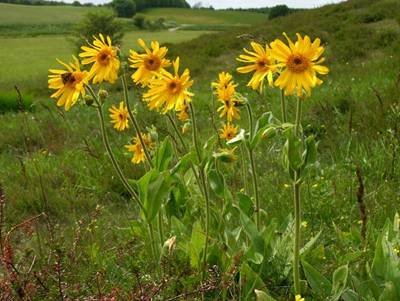
Found in sandy fields and on mountain slopes, especially in high forests and plateaus. It grows 30 to 50 cm tall, with a hairy stem, a rosette of large oval leaves at its base, and large, round, orange flowers. Its roots spread sideways and are dark brown or black, and the whole plant is aromatic.
Parts used
The flowers (June to August) and the roots of plants under 2 to 3 years old (older roots become woody).
What it contains
The flowers contain an essential oil, colouring matter, fats, sugars, organic acids, wax, mucilage and other compounds, including anti-inflammatory substances and others that irritate the skin.
External uses
- Compresses with arnica tincture are one of the best-known remedies for bruises and swelling from blows, sprains and bursitis (for example from kneeling a lot), and for aching muscles after long walks or sport.
- Arnica ointment for lips chapped by winter cold.
- For chilblains on the toes, massage with equal parts of arnica tincture and glycerine.
Arnica tincture: add 5 parts of pure alcohol to 1 part of dried flowers in a clear glass bottle, seal it and leave it in the sun for 10 days, shaking once a day. For a compress, add half a teaspoon of tincture to a quarter of a litre of lukewarm water.
Caution: arnica is poisonous if swallowed and must only be used on the skin, never on broken skin or open wounds. Some people get skin inflammation from it: stop at once if redness, swelling or itching appears after the first use. Heart disease, stroke and asthma need medical treatment, not arnica.
Note: these are traditional uses, and most have not been proven by research. Talk to your doctor or pharmacist before using herbs as medicine, especially if you are pregnant or breastfeeding, have a long-term illness or take other medicines.
By Dr Elias Jabbour

Like

Love

Angry

Dislike