Latin name: Rosa canina, of the rose family (Rosaceae)
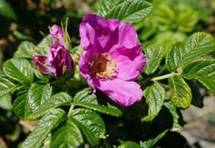
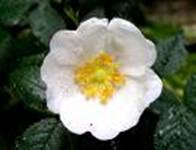
A deciduous shrub, 1 to 3 m tall, common in hedges, at woodland edges and on scrubby slopes. Its arching stems carry strong hooked thorns, its leaves have 3 or 5 toothed oval leaflets, and from June to July it bears single white or pale pink, fragrant flowers. The red, oval hips hold many seeds. It is grown from stem cuttings and harvested from August to October.
Parts used
The hips, seeds and flowers.
What it contains
The hips are rich in vitamin C, with a little vitamin A (as carotenoids), pectin, tannins, colouring matter and organic acids such as citric and malic acid.
Uses
The hips are a tonic and are used against diarrhoea as an astringent; the seeds are diuretic. Jams, syrups and teas are made from the hips.
- Powdered flowers, sometimes with dried mint, as a poultice twice a day for chafed or red skin.
- Rosehip tea supplies vitamin C and helps the body's defences against colds; it is also a mild laxative and used for gout and rheumatism. Boil 1 teaspoon of dried hips in a cup of water for 10 minutes; 1 to 3 cups a day.
Note: these are traditional uses, and most have not been proven by research. Talk to your doctor or pharmacist before using herbs as medicine, especially if you are pregnant or breastfeeding, have a long-term illness or take other medicines.
By Dr Elias Jabbour

Like

Love

Angry

Dislike