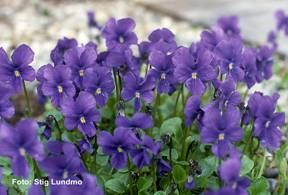
Latin name: Viola, of the violet family (Violaceae)
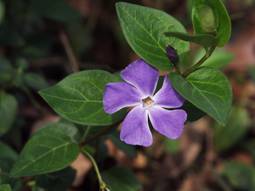
A perennial plant that lives in sunny fields and on walls up to about 1,100 m, with many species. It is grown for decoration, for its lovely scent and for its precious perfume. It grows 10 to 20 cm tall, with fragrant dark blue flowers on a creeping stem, heart-shaped leaves and leaf-like stipules. It flowers in spring.
Parts used
The leaves, the flowers, and the roots before flowering.
What it contains
Mucilage, salicylic acid and methyl salicylate, a bitter alkaloid, saponins and vitamin C.
Traditional uses
- A syrup of violet flowers was used for dysentery.
- Drunk like tea for nerve inflammation, and as a gargle to clean the throat.
- Diuretic: a decoction of the flowers is drunk for kidney complaints.
- An infusion of the dried flowers is used to calm the nerves and coughs.
- Fresh flowers are smelled to ease headache.
- Used to wash the joints in rheumatism, drunk to relieve itching, and applied to scabies.
It is considered cough-relieving, expectorant, skin-softening, wound-healing, mildly laxative, pain-relieving and sweat-inducing. In large doses it causes vomiting.
How it is used
Internally: an infusion of 15 g per litre of water, 2 to 3 cups a day, is used for bronchitis and coughs. An infusion of the leaves and roots is used to loosen phlegm in older people only; for children and teenagers, only the flower infusion or violet syrup is used, sweetened with rock sugar or honey. As a gargle for sore tonsils, use an infusion of equal parts of sweet violet leaves and wild mallow flowers, diluted to 1 teaspoon per cup of lukewarm water.
Externally: an infusion of 30 g per litre of water, used as a lotion, gargle or compress, for chapped skin, skin care and sore throats.
Whooping cough, measles and a high fever in children need a doctor; don't rely on herbal remedies for them.
By Dr Elias Jabbour

Like

Love

Angry

Dislike