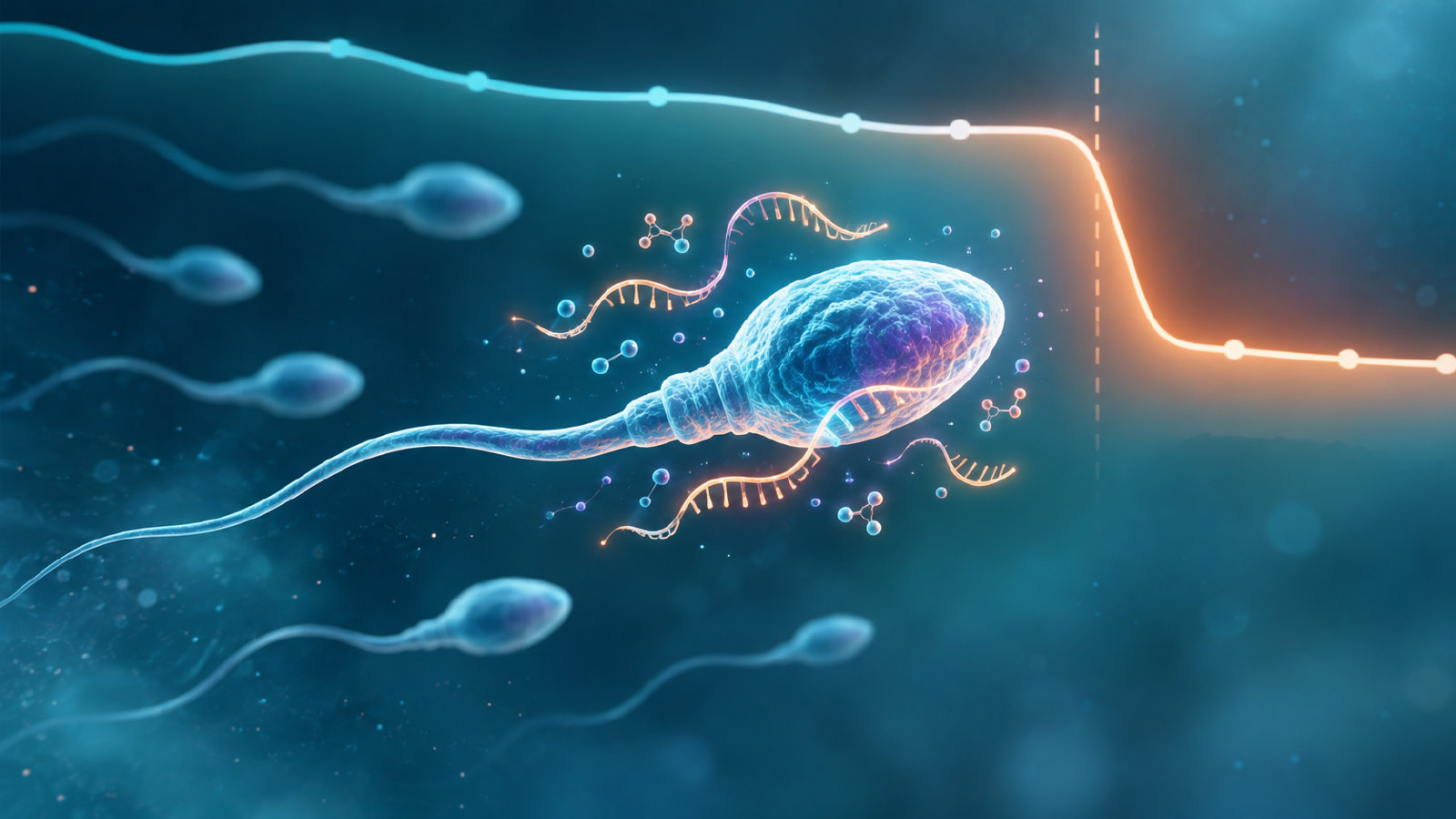
When scientists study male infertility, they usually focus on how DNA in sperm becomes damaged with age. This has helped explain why fertility declines and why some harmful genetic mutations may be passed on to children. But sperm also carry tiny fragments of RNA (ribonucleic acid), a molecule that helps our cells turn genetic instructions into proteins. Scientists believe RNA plays a role in fertilisation, when a sperm joins an egg, and in the earliest stages of embryo development.
A new study has revealed a sudden decline in sperm health around middle age, along with a sharp change in the lengths of RNA fragments carried by sperm. The research was conducted by a team from the University of Utah in the United States and published in The EMBO Journal. The researchers examined small RNA fragments found in the sperm of mice of different ages. They focused on how long these fragments were and how their lengths changed with age. They then studied human sperm samples from two separate groups of donors to see whether the same changes occurred in people. The team also carried out a laboratory experiment in which they introduced RNA fragments resembling those found in older mice into mouse embryonic stem cells. They then monitored gene activity inside these cells.
The researchers found that the mixture of RNA fragments in mouse sperm changes sharply in middle age. They described this phenomenon as an “ageing cliff”. The heads of older sperm contained a higher proportion of long RNA fragments and fewer short ones. The researchers also observed a similar change in humans. They believe this shift may build up gradually with age before reaching a tipping point, when a sudden and dramatic change occurs in middle age.
The researchers also wanted to find out how these longer RNA fragments affect cells. They injected similar fragments into stem cells and found changes in metabolism (the process of producing energy from nutrients) and deterioration of nerve cells.
Developmental neuroscientist Noriko Osumi from Tohoku University in Japan says these RNA fragments are not simply useless molecular leftovers. They may carry epigenetic information, which can influence how genes work without changing the DNA itself. These changes could have important effects on children’s development.
As more couples around the world are choosing to have children later in life, this study draws attention to risks we were previously unaware of. We still know relatively little about how a father’s age affects the health of his children. A World Health Organization study involving 8,500 couples across 25 countries found that male factors contributed either fully or partly to 45% of infertility cases. Yet male infertility often receives too little attention and remains poorly understood. As a result, women frequently undergo many of the medical procedures involved in assisted reproduction, even when they have no fertility problems themselves.
Of course, the new study does not prove that men experience a sudden, dramatic change in sperm during middle age, or that such a change causes infertility or neurological diseases in their children. But it opens the door to a better understanding of the complex processes involved in heredity and fertility.
Source: https://link.springer.com/article/10.1038/s44318-025-00687-8

Like

Love

Angry

Dislike