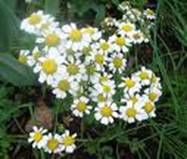
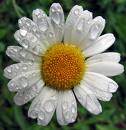
Chamomile (Matricaria chamomilla) is an aromatic annual herb of the daisy family (Compositae), native to southern and eastern Europe and now grown in many countries. It is a much-branched plant, 15–60 cm tall, with finely divided, thread-like dark green leaves. From June to August it bears flower heads that smell of apples: white ray florets around a yellow centre on a hollow, cone-shaped base. Wild chamomiles grow in fields and by roadsides across the Levant, and it is also grown for its flowers.
Parts used
The flower heads, gathered in June and July and dried; sometimes the buds, stems and leaves.
Constituents
About 1% of a blue volatile oil containing chamazulene (formed from matricin) and alpha-bisabolol, flavonoids such as apigenin, coumarins, mucilage, fatty acids, bitter substances, choline, minerals and vitamin C.
Traditional uses
Chamomile is mostly used for the digestive system. It is anti-inflammatory and antispasmodic, relieves wind and is used to soothe the stomach lining and help with indigestion and gastritis. It is also used as a mild sedative, for colds, to promote sweating and for period pain.
- Tea: one teaspoon of flowers to 150 ml of hot water, covered and left for 10 minutes; one cup up to three times a day for indigestion, colic, nervousness, insomnia, headache or colds.
- Gargle and mouthwash: 20 g of flowers in a litre of boiling water, for sore throats, tonsillitis, mouth ulcers and inflamed gums.
- Steam inhalation: breathing the steam of an infusion for colds and blocked airways.
- Skin: warm compresses for skin inflammation, eczema, small wounds and sores; added to bath water for skin irritation, haemorrhoids and boils. Chamomile is found in many creams, masks and hand creams.
Caution: drinking large amounts may cause irritability, headache, insomnia and nausea. Chamomile can cause allergic reactions in people allergic to ragweed, daisies or related plants, and may interact with blood thinners such as warfarin. Don't use herbal infusions in the eyes, as enemas or as vaginal douches, and don't give herbal teas to babies without asking a doctor.
By Dr Elias Jabbour

Like

Love

Angry

Dislike