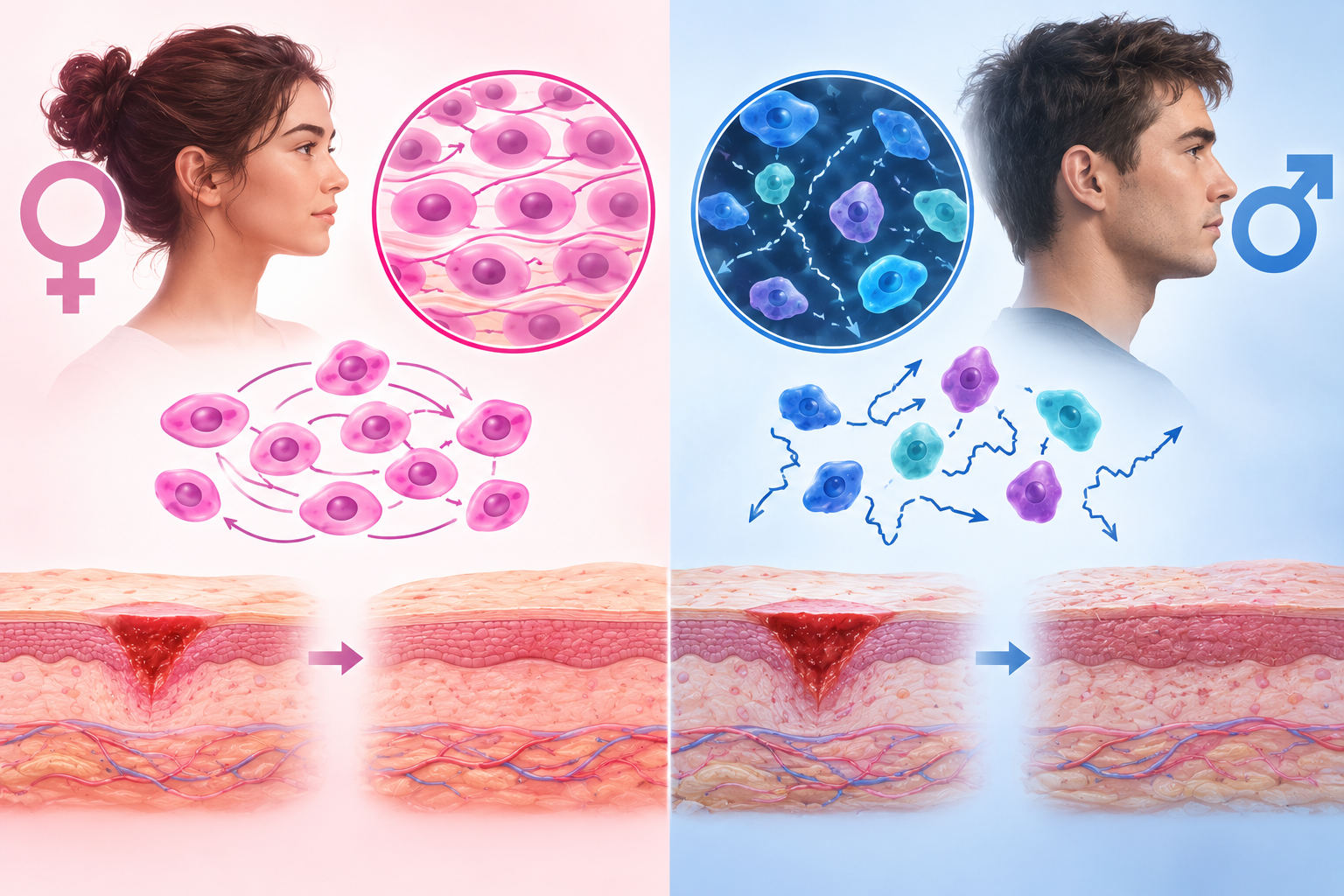
Women and men communicate differently. When women get together, the social and emotional exchange is very different from a gathering of men. What is surprising is that the difference is not only between people. Recent research has shown that the way a woman's cells communicate to heal a wound differs from the way a man's cells do. Our differences go all the way down to the level of cells.
In a study published in Nature, scientists followed the behaviour of stem cells in the skin of living mice for five full months. They watched closely how these stem cells divide and pass through an intermediate stage with a limited number of divisions before turning into mature, specialised skin cells that move up to the surface to protect the body.
In female mice, the two sister cells produced when a stem cell divides worked in remarkable harmony, like two rowers in one boat: either both divided again or both specialised at the same time. Male cells behaved individually and with less coordination. Experiments showed that sex hormones are responsible. When the ovaries were removed from females, stem cell growth slowed and the harmony disappeared completely, but giving estradiol (a form of oestrogen) brought back both the activity and the harmony. Testosterone, the male hormone, on the other hand, sped up the maturing of cells and their exit from the stem cell layer, and it also sped up cell specialisation when tested on human skin rebuilt in the laboratory. This cell behaviour showed directly in how wounds on the mice's backs healed: females' wounds closed much faster than males', especially in the first few days.
The findings open a promising path towards sex-specific treatments to speed up the healing of burns and chronic wounds, particularly in people with diabetes, and towards a better understanding of how to prevent skin cancer. Still, the experiments were limited to mice and lab-grown cells. We do not yet know how closely the same mechanism works in the human body; that will need clinical trials.

Like

Love

Angry

Dislike