Latin name: Laurus nobilis, of the laurel family (Lauraceae)
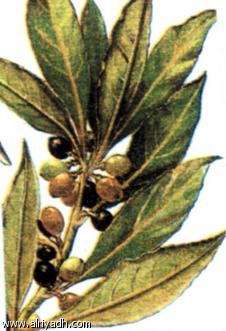
An evergreen shrub that can live 100 years, 4 to 6 m tall, with male and female plants. It looks like an olive tree and its fruits look like olives, but black. Its leathery leaves are bitter and fragrant, with slightly wavy edges and scent glands. The fruits are soft, oval and black. It is grown from seed in nurseries.
Parts used
The leaves, flowers, fruits and seeds.
What it contains
The fruits contain about 3% essential oil, along with fats (from lauric, palmitic and linoleic acids), tannins, phellandrene, eugenol, mucilage and resin. The oil is used to make medicinal laurel soap.
Traditional uses
- Placed among dried figs to scent them and keep insects away.
- With honey for headaches, shortness of breath, chronic cough and colic.
- Astringent, so used against diarrhoea.
- Laurel oil massaged into the skin for rheumatism and to relieve itching, for example in scabies.
- Crushed berries or bark boiled in vinegar as a mouth rinse for the teeth.
- Bay leaves in soups and stews to flavour food, and with meat and fish to mask their smell. Bay aids digestion and relieves wind.
Laurel oil is used to make the much-loved laurel soap and cosmetics. Bay leaves are safe in cooking amounts, but large amounts can be harmful.
Note: these are traditional uses, and most have not been proven by research. Talk to your doctor or pharmacist before using herbs as medicine, especially if you are pregnant or breastfeeding, have a long-term illness or take other medicines.
By Dr Elias Jabbour

Like

Love

Angry

Dislike