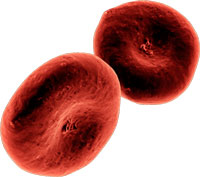
Scientists have discovered a gene that controls the production of a type of haemoglobin that can make sickle cell anaemia and thalassaemia much less severe.
The discovery could change the treatment of thalassaemia and sickle cell anaemia and ease the suffering they cause: severe pain, damage to the eyes and other organs, infections and strokes.
Fetal haemoglobin (HbF) is controlled by a gene that switches off its production during development. The gene is called BCL11A, according to a study at Children's Hospital Boston and other centres in the US.
Haemoglobin is the protein in red blood cells that carries oxygen from the lungs to every cell in the body. In sickle cell anaemia, haemoglobin is abnormal and clumps together, giving red cells a sickle shape that blocks blood vessels and starves tissues of oxygen. In thalassaemia, the body has difficulty making normal adult haemoglobin.
A baby in the womb makes a type of haemoglobin that can take oxygen from the mother's haemoglobin; after birth this fetal haemoglobin gradually disappears as adult haemoglobin takes over. Other studies have shown that people with sickle cell anaemia who keep producing fetal haemoglobin have milder disease, and for years scientists have tried to find ways to increase it.
Now scientists have found that BCL11A puts the brakes on fetal haemoglobin: switch the gene off, and production takes off like a cart without brakes. The drug hydroxyurea, approved in 1998 to reduce the painful crises of sickle cell anaemia, also raises fetal haemoglobin, but its use is limited because some patients don't respond and it has significant side effects. The new discovery encourages the development of treatments that target BCL11A to boost fetal haemoglobin.
Sickle cell anaemia: the basics
Sickle cell anaemia is the most common inherited blood disease, affecting 70,000 people in the US, mostly Black Americans, and millions worldwide. Its pain can change a person's life, affecting their ability to work, long-term health and survival, and patients' lives are shorter because of infections, lung problems and strokes.
Treatments over the past three decades doubled patients' average life expectancy between 1972 and 2002. They include medicines, blood transfusions, bone marrow transplants and other treatments for complications, but until now doctors couldn't act directly on the mechanism of the disease.
Update: in 2023, the first gene-editing treatment for sickle cell disease and thalassaemia, which works by switching off BCL11A, was approved in the UK and the US.

Like

Love

Angry

Dislike