Some small, difficult or emotional moments stay etched in our memory for years, while we quickly and easily forget most details of ordinary days. The reason has to do with a hormone the body releases when we are emotionally stirred: cortisol, the well-known stress hormone. Doctors know that cortisol helps fix memories in place, but exactly what happens inside our heads has remained a puzzle, especially because the brain areas involved in emotion and in storing information overlap. A new study has finally shown how the hormone rearranges communication between brain networks to make those particular memories hard to forget.
The study was carried out by researchers at Yale University in the United States, led by Dr Elizabeth Goldfarb, and published in Science Advances. Each volunteer took a pill containing hydrocortisone (a drug form of cortisol) in one session and a placebo pill with no active ingredient in another, in a double-blind trial (neither the participant nor the supervisor knew which pill had been given). Participants looked at a variety of pictures while their brains were scanned with functional MRI (fMRI), which measures blood flow and oxygen levels to show which areas of the brain are most active. They rated how strongly each picture affected them in quick takes of about five seconds. The next day, the researchers tested how well they remembered the pictures.
Cortisol did improve participants' memory of pictures and situations with strong emotional weight, and it did so by changing how whole networks worked. When the hormone rose, the brain's emotion-processing networks became more responsive and more organised, reacting strongly and consistently to the emotional importance of an event. Cortisol also made the memory networks more specialised in taking in and encoding this emotional information, and it increased direct coordination between the emotion networks and the memory networks. Together, these changes turned a moving experience into a firm, long-lasting memory.
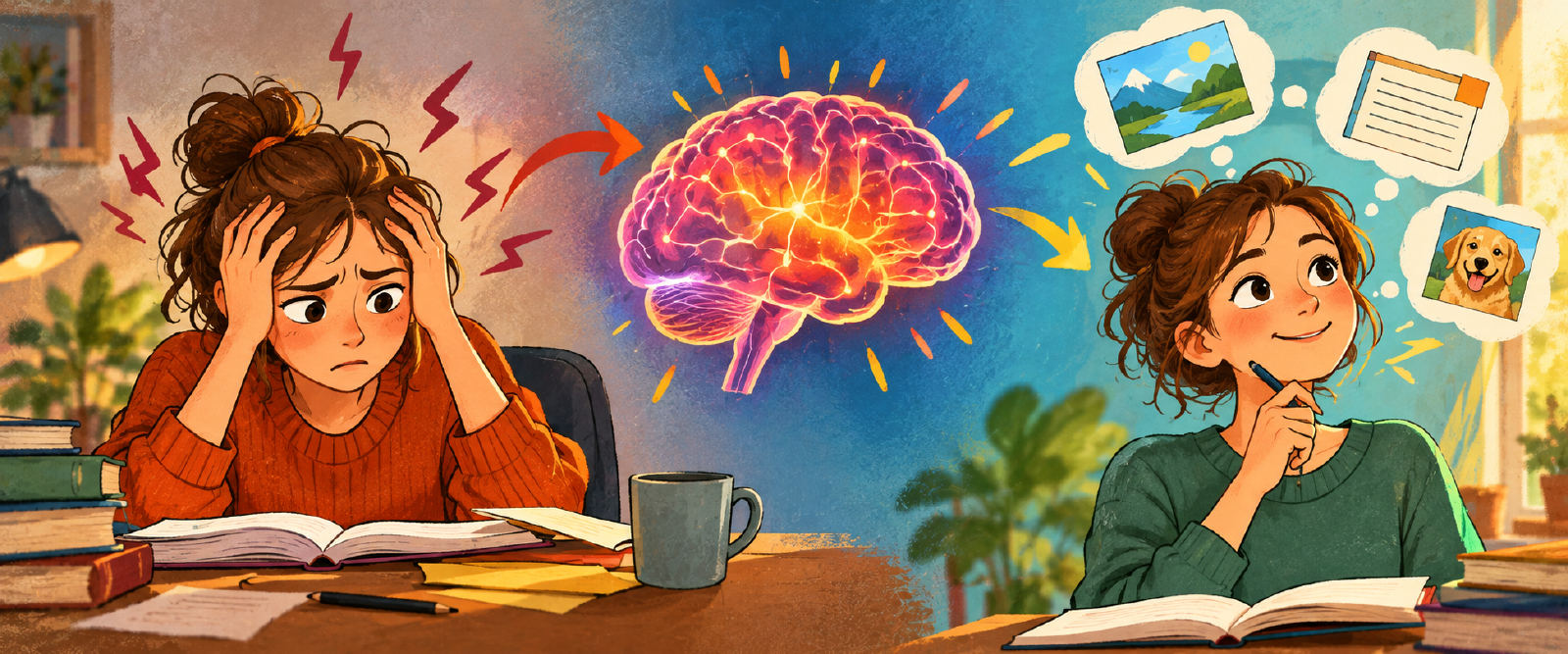
If you need to learn something new at exam time, link the information to exciting feelings, gripping stories or personal situations. Interest and emotion help the brain under pressure to grab information and hold on to it.

Like

Love

Angry

Dislike