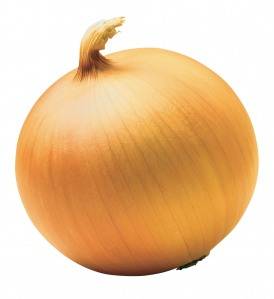
A vegetable of the lily family, in white and red varieties, used since ancient times for cooking and medicine. It is eaten raw and cooked. Raw onion is believed to help lower blood cholesterol and may play a part in preventing some cancers. It contains a substance that thins the blood, which may help people at risk of blood clots in the heart. It has a mild laxative effect on the gut, and its smell puts some people off.
Onion is credited with anti-inflammatory, diuretic and stimulating effects, and is used traditionally for various kinds of rheumatism.
Onion has a typical sharp taste, and there are many kinds, the main ones being kitchen onions, spring onions, chives, leeks and pearl onions.
It contains volatile, antiseptic oils and a lot of sulphur. In the lab, the volatile oils in onion juice kill many bacteria, including some that cause sore throats. It also stimulates the bowels.
Traditional uses
Warm onion poultices are used traditionally on the chest for coughs, on the lower back for difficulty passing urine, and on boils to bring out the pus. To make a poultice, slice or chop the onion, warm it (without browning) and place it on the area, tied with a cloth, then wrap with a larger woollen cloth to keep the heat in. Renew it every 12 hours.
Onion is also smelled in cases of dizziness or fainting, because its sharp smell stimulates breathing and circulation; and crushed onion boiled in olive oil is used on cracked nipples, abscesses and haemorrhoids. Onion juice is used on raised scars.
Eating one medium onion a day helps digestion, relieves wind and loosens the bowels. For children's coughs, small, frequent doses (a teaspoon) of onion cooked with honey or rock sugar are used traditionally. Onion is also said to help lower blood sugar, but people with diabetes should not use it instead of their treatment.
Onion whets the appetite and helps digestion: don't hesitate to include it in your daily meals. Onion soup is easy to make and a winter favourite.
In the kitchen and garden
Red onion skins dye eggshells a deep red and colour soups, broths and pale sauces. Spring onions and pearl onions are used for pickles. Onions can be dried and sold as powder. Keep dry onions in a dry, well-aired, dim place, or they will sprout in storage. Small bulbs grown from seed are planted in early spring; each large onion needs about 400 cm² of soil.
Nutritional value (per 100 g of raw onion, approximately)
- Water: 89%
- Energy: 40 calories
- Carbohydrates: 9 g
- Fibre: 1.7 g
- Protein: 1.1 g
- Fat: 0.1 g
- Vitamin C: 7 mg
- Calcium: 23 mg
- Phosphorus: 29 mg
By Dr Elias Jabbour

Like

Love

Angry

Dislike