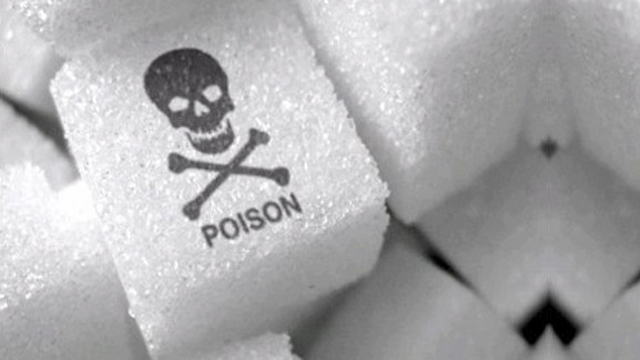
Today we are talking about sugar, the star that now goes with most of our meals in its many forms. It comes as the familiar fine white crystals, or hidden in pastries, juices and sweets, and it has even found its way into many medicines, toothpastes and cigarettes.
Before looking at its harms, let us see where it comes from. About two thirds of sugar comes from sugar cane and one third from sugar beet. Chemically it is sucrose, made of glucose and fructose.
White sugar is the product of several chemical processes. All the fibre, proteins, vitamins and minerals, which make up about 90% of the cane or beet, are separated out. The sugar is then bleached with sulphur dioxide, filtered, and heated to evaporate the water until the remaining part crystallises. Pure sugar therefore has no nutritional value, only a lot of calories.
White sugar in its present form was not common before the beginning of the twentieth century; most people used sugar in its natural form.
The harms of sugar are many and serious, and sadly many people are unaware of them. A study published in an American science and medicine journal described white sugar as the greatest killer in human history, with more victims than opium and atomic radiation, especially among peoples whose diet is based on white bread and polished rice.
The list of diseases linked to sugar is long, including:
- Exhausted adrenal glands, hormone disorders.
- Allergies, eczema, fungal infections.
- Anxiety, poor concentration, behaviour problems, hyperactivity, mood swings.
- Arthritis and rheumatism.
- Binge eating and obesity.
- Osteoporosis.
- Cancer, especially breast and colon cancer.
- Colitis and ulcers.
- Tiredness, high cholesterol and oestrogen, diabetes, liver problems and weak immunity.
From a nutritional point of view, sugar is one of the most acid-forming foods in the blood, and cancer cells are known to develop in an acidic environment.
Because sugar is a simple carbohydrate, the body quickly turns any excess into fat, which clogs the coronary arteries and the small blood vessels, including those in the brain. These blockages lead to heart disease, hardening of the arteries, stroke and other circulatory diseases.
Soon after we eat sugar, it starts to disturb the nerves that control digestion, impairing the body's ability to digest food. The harm is greatest when sugar or a sweet food is eaten at the start of a meal.
Tooth decay is directly linked to sugar: certain bacteria in the mouth thrive on sugar and turn it into acid that weakens tooth enamel.
Sugar without vitamins and fibre is absorbed quickly by the gut, so the pancreas releases insulin to keep the blood in balance. The more sugar in the diet, the more the body uses up its insulin reserves, until the organs tire and the problems of diabetes begin.
Eating a lot of sugar also depletes potassium and magnesium in the body, which raises blood pressure. It drains two important B vitamins, B2 and B3, which can lead to mental or nervous disorders. It also strongly affects the brain, making it sluggish and the nervous system relaxed, so people feel sleepy and find it harder to concentrate. As Dr Ferguson put it: "If you want to win an argument with someone, offer them sweets."
What are the healthy alternatives?
First, follow a healthy diet as far as possible, making whole grains the basis of your daily meals. They provide plenty of complex carbohydrates, a healthy source of energy that keeps us active all day. Cut down as much as possible on animal products, which make us crave sweets after a heavy meal. Chewing food well also releases its natural sweetness, because saliva breaks down the complex sugars in it.
Second, choose natural sweet foods, such as honey, grape or date molasses, and ripe, dried or even cooked fruit.
And finally: a can of fizzy juice contains 7 spoons of sugar, a can of cola 10, and a sports drink 20! The choice is yours.
By Dr Fawzat Hayek, member of the German Society for Natural Medicine

Like

Love

Angry

Dislike