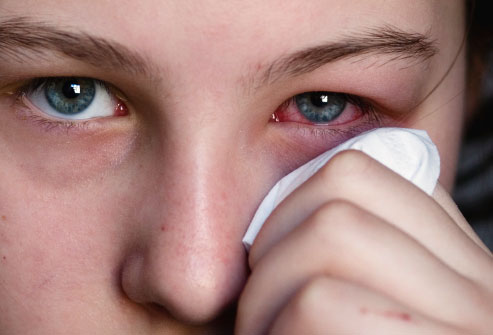
Spring eye allergy (vernal keratoconjunctivitis and seasonal allergic conjunctivitis) is a common seasonal eye disease that needs treatment and prevention. We spoke to Professor Talal Habboush, an eye specialist and surgeon and dean of the Faculty of Medicine at Al-Baath University in Syria.
Eye allergy, or allergic conjunctivitis, affects the eyes at the start of spring because of pollen in the air, he explains. People complain of burning in the eyes, which can sometimes be very severe, with itching of the eyes and eyelids and watering; these are called allergic attacks. Some people are also more prone to allergy because their body reacts to a particular allergen (antigen), and some inherit a tendency to allergic inflammation.
The aim of treatment, especially in vernal disease, is to relieve discomfort and symptoms. Using cortisone (steroid) eye drops for a long time without medical guidance is a mistake, because it can cause serious problems, above all glaucoma (raised pressure in the eye). Glaucoma damages the optic nerve and the eye's function in general, especially in growing children, whose eyes are more prone to raised pressure because their tissues are softer, and it can lead to loss of the nerve.
Prevention means avoiding things that set off the disease, such as dust, allergens, and substances in perfumes, soaps and cosmetics. Washing the eyes with cold water eases itching and irritation a great deal, and antihistamines can be started before spring begins.
Contact lenses have many drawbacks, he adds, especially when it comes to hygiene. Wearing them for a long time eventually harms the eye: a lens is a foreign body and reduces the eye's access to air.

Like

Love

Angry

Dislike