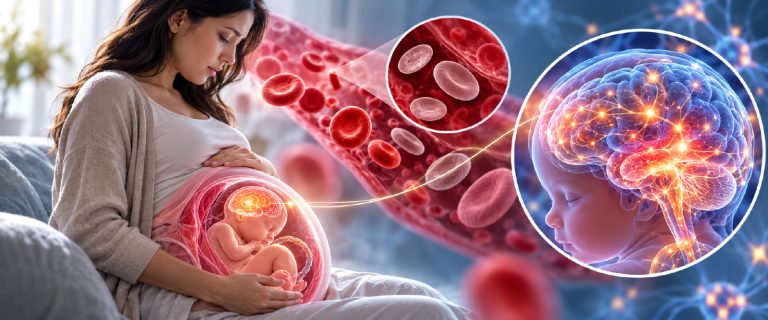
About 25% of pregnant women in the United States do not get the minimum recommended amount of vitamin C (ascorbic acid). We also know that stress in a pregnant woman can lead to a shortage of several key nutrients and can affect the baby’s development. But we do not know exactly how a lack of nutrients shapes a baby’s behaviour. So a new study looked at whether taking vitamin C can protect children from emotional distress. The study was carried out by a team of researchers at Oregon Health & Science University (OHSU) in Portland. It followed 302 mothers and their children over time. The researchers measured the mothers’ levels of depression, anxiety and stress during pregnancy using standard clinical scales. Dietitians also carried out interviews in which the mothers recalled what they had eaten, so that the vitamin C from whole foods could be separated from the vitamin C from supplements (the daily vitamins taken in pregnancy). Then the children’s caregivers filled in questionnaires that measured the baby’s behavioural responses, outgoing tendency, irritability and how quickly the baby became upset.
The results showed that high psychological stress in the mother during pregnancy was linked to lower absorption of vitamin C from food. A shortage of vitamin C, together with the mother’s stress, went along with more agitation, more crying and more difficulty calming the baby at six months of age. The statistical analysis showed that one protective factor against distress in the baby was taking daily vitamin C supplements (products, not food alone). The biological explanation is that vitamin C works as an antioxidant and as a regulator of the nervous system. It supports the formation of nerves, the building of collagen in the blood vessels of the brain, and the regulation of neurotransmitters (the chemical messengers between nerve cells).
These results show how important nutrition is as a factor that can be changed to protect the mental and emotional health of babies. But we do not yet know whether this protective effect lasts as the child grows older. So the research team plans to follow the same group of children through the later stages of their development. They want to check whether taking vitamin C during pregnancy continues to reduce the risk of mental health disorders, attention problems and weak executive functions (the mental skills that help us plan, focus and control ourselves) in the future.
Source:
Wood, E. K., Volk, H. E., Nousen, E. K., Nomura, O. K., Howery, A. N., Horgan, A. M., Nigg, J. T., Gustafsson, H. C., & Sullivan, E. L. (2026). Prenatal Vitamin C supplementation mediates the association between prenatal distress and infant negative affect: A prospective cohort study. Developmental Psychology. Advance online publication. https://doi.org/10.1037/dev0002263

Like

Love

Angry

Dislike