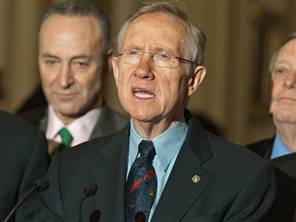
Senate Democrats approved a historic health care bill on Christmas Eve that could define President Barack Obama's legacy by bringing near-universal health coverage to the United States for the first time.
The 60–39 vote on a cold winter morning followed months of hard negotiation and 24 days of debate, after a series of failures by earlier Congresses to reach this point.
With Vice President Joe Biden, who is also president of the Senate, in the chair, 58 Democrats and two independents voted yes. Republicans voted no unanimously.
The tally was well above the simple majority needed, but it showed the deep philosophical divide between Democrats and Republicans over how American health care should be delivered. The bitterness is expected to continue as the Senate bill is merged with the House of Representatives' bill, which must happen before Obama can sign a final law in the new year.
There are big differences between the two measures, but Democrats say the result is far from a failure and would extend health insurance to more than 30 million more Americans.
A victory for Obama
Passing the bill gives Obama a bright end to a difficult year that began with high hopes after his election win. His approval rating now hovers around 50% as he copes with rising unemployment and growing violence in Afghanistan. Obama delayed his Christmas holiday in Hawaii until after the Senate vote, a sign of its importance to his presidency.
Obama quickly praised the vote, saying his government was "finally poised to deliver on the promise" of reforming a troubled system. He noted that presidents since Theodore Roosevelt in 1912 had tried and failed to reform health care, and repeated that the bill would help end unpopular insurance practices, such as refusing coverage for pre-existing conditions.
Vicki Kennedy, widow of the late Massachusetts senator Edward Kennedy, who made health reform his life's work, watched the vote. Majority leader Harry Reid said it marked the start of a process to improve the American health system.
After the vote, House Republican leader John Boehner attacked the bill: "Not even Ebenezer Scrooge could come up with a plan this cruel and greedy." He complained that it would raise health costs for families and small businesses, raise taxes during a recession and cut federal health benefits for older people.
Insurance required
The legislation would ban insurers from denying people coverage or charging them higher premiums because of existing medical conditions. The Congressional Budget Office projects that the bill would cut the deficit by 130 billion dollars over the next 10 years, assuming lawmakers carry through hundreds of billions of dollars in planned cuts to insurers, doctors, hospitals and others who treat patients.
For the first time, the government would require every American to have insurance, with subsidies to help people on low incomes. Employers would be encouraged to cover their staff through a mix of tax breaks and penalties. The legislation would cost nearly 1 trillion dollars over 10 years, paid for by a mix of taxes, fees and cuts in Medicare.

Like

Love

Angry

Dislike