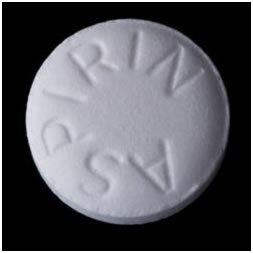
Common painkillers taken regularly, such as ibuprofen and aspirin, may lower the blood level of PSA, a protein made by the prostate that doctors use to help judge whether a man is at risk of prostate cancer.
The authors of the new study warn men against taking painkillers in an attempt to prevent prostate cancer. "Men who took drugs such as aspirin and other non-steroidal anti-inflammatory drugs had lower PSA levels, but there isn't enough data to say they were less likely to get prostate cancer," said the lead author, Dr Eric Singer, a urology resident at the University of Rochester Medical Center. "The study was limited, and we don't know how many of these men actually got prostate cancer."
Singer's team studied the records of 1,319 men over 40 who took part in the National Health and Nutrition Examination Survey in 2001–2002. They looked at the men's use of painkillers such as ibuprofen, aspirin and paracetamol (acetaminophen), and at their PSA levels, one of several clues doctors watch to judge a man's risk of prostate cancer.
Men who took non-steroidal anti-inflammatory drugs regularly had PSA levels about 10% lower than men who didn't. The team saw something similar with paracetamol, but the result wasn't statistically significant because few men in the study took it.
It might be tempting to assume that a low PSA automatically means a lower risk of prostate cancer, but the author stressed that it is too early to draw that conclusion. Co-author Edwin van Wijngaarden, an assistant professor of preventive medicine, said that while the results are in line with other research suggesting some common painkillers may reduce the risk of prostate cancer, the new findings are only preliminary and don't prove a link.
A man's PSA can be raised for many reasons that have nothing to do with cancer, Singer said. Inflammation, for example, is sometimes part of cancer and sometimes not, so a lower PSA might reflect less inflammation without any effect on cancer risk. It is also possible that painkillers lower PSA artificially, masking the risk: PSA goes down, but the risk stays exactly the same.
"More than anything, these results stress how important it is for doctors to know what medicines their patients are taking," Singer said. "Some drugs commonly used for the prostate, for example, are known to lower PSA. Doctors should also ask their patients about painkillers such as aspirin and ibuprofen."
More research is needed to understand the findings. Meanwhile, men should not start taking painkillers to try to prevent prostate cancer.

Like

Love

Angry

Dislike