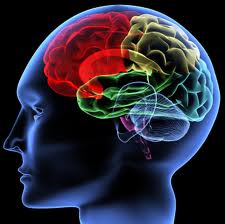
In the first study of its kind, researchers have identified the physical structure of intelligence and the set of brain areas responsible for tasks linked to it, such as language, spatial reasoning and memory.
The study, published in Brain: A Journal of Neurology, is unusual in that it recruited 182 American veterans of the Vietnam War who had suffered injuries to specific parts of the brain from wounds that penetrated the head.
"The main challenge for us was finding patients with damage confined to particular areas of the brain," says Aron Barbey, professor of neuroscience at the University of Illinois and lead researcher. In stroke patients, for example, several areas are affected at once, which makes it very hard to tell which area is responsible for which function.
"But the precisely located injuries of the participants in this study allowed us to draw conclusions about the importance of each area for particular functions linked to intelligence," Barbey adds. "By studying the impairment caused by each injury and linking it to the injured area, we could map the overall structure of the intelligence network in the human brain."
The researchers scanned the participants' brains with CT and gave them a complex battery of intelligence tests. They combined the scans into a three-dimensional map of the participants' brains, divided into 3,000 voxels (the 3D equivalent of the pixels in a flat image). By identifying the damaged voxels in soldiers who could not perform certain tests and comparing them with soldiers in whom those areas were intact, they could pinpoint the brain areas responsible for many mental functions.
Most of these areas were in the left half of the brain, in the temporal lobe (behind the ear) and the parietal lobe (at the top and back of the head), and in the white matter that connects them.
The scientists also found that brain areas responsible for self-control, planning and other "executive" tasks overlap with these areas and also contribute to intelligence.
"Our results support growing evidence that intelligence is not located in one particular area of the brain, or even in the whole brain, but depends on these areas working together," says Barbey. "Intelligence involves processing and combining information from the brain areas responsible for vision, language, spatial awareness and executive tasks." He adds: "These findings will pave the way for more research into how factors such as environment, genetics and nutrition shape and support this great gift that makes us human."

Like

Love

Angry

Dislike