The earliest evidence of humans using plants or other natural substances as medicine goes back to the Neanderthals, 50,000 years ago.
In northern Iraq, archaeologists found human remains buried with herbs now known to kill bacteria, and some of these herbs are still used by people in the region today.
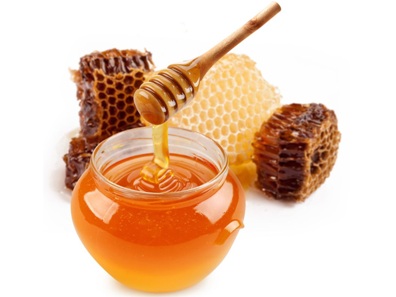
Honey
The first written recipe for treating infection was set down by the Egyptians in 1550 BC. It was a mixture of animal fat, honey and linen, used as an ointment to dress wounds.
Honey kills bacteria by drawing water out of them. An enzyme in honey, called inhibine, also turns glucose and oxygen into hydrogen peroxide, an antiseptic. Honey has also been found to be excellent for treating infected varicose ulcers.
A preparation called tincta in melle linamenta was a common remedy among the Romans. It resembled the Egyptian ointment, with honey as its active ingredient. The Greeks also dressed wounds with honey, often mixed with copper oxide.
More recently, during the Second World War, honey and lard were used in Shanghai to treat wounds and skin infections, with very good results.
Moulds
Alexander Fleming's work in the 1920s showed that moulds such as Penicillium produce chemicals that kill bacteria, but the use of moulds goes back to the Egyptians and perhaps earlier. An Egyptian doctor wrote on papyrus: "If a wound festers, put mouldy bread on it." In fact the Egyptians used all kinds of moulds to treat surface infections, boils, spots and other skin infections.
Wine and vinegar
Wine and vinegar have been used to treat infected wounds since the time of Hippocrates. Vinegar is an acid with antiseptic properties, meaning it kills disease-causing organisms, including viruses and bacteria.
Wine's antibacterial effect cannot be put down to alcohol alone, because its alcohol content is too low. Modern chemical analysis has shown that wine contains an antibacterial substance called malvoside, which gives it its action against bacteria.
Copper
Inorganic substances have been used to treat infection throughout history. The Egyptians, Greeks and Romans used copper widely, together with honey.
Modern research has shown that copper is antibacterial. Impetigo, a skin disease caused by staphylococci, is still treated in France with Eau Dalibour, a mixture of copper and zinc. The recipe goes back to Jacques Dalibour, a surgeon in the army of Louis XIV, and was probably part of French folk medicine long before that.
The 19th and early 20th centuries
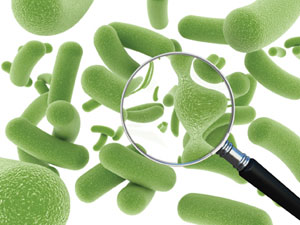
Good bacteria. During the 19th century, many experiments tried to find a magic bullet that would rid humanity of the scourge of infection. In 1877, researchers in Paris found that good bacteria could be used against harmful ones: harmless bacteria could compete with disease-causing bacteria, even if they could not kill them. Louis Pasteur in Paris showed the benefit of injecting animals with harmless soil bacteria to compete with anthrax bacteria, and other experiments on anthrax and cholera showed that harmless bacteria could stop the growth of disease-causing ones.
Pyocyanase. In Germany in 1888, an antibacterial substance was isolated. Animal experiments showed it to be very effective, but trials in people with various infections were disappointing: the drug turned out to be too toxic, and all trials were stopped.
Salvarsan. In 1910, a promising dye-based substance called Salvarsan proved effective against syphilis, which was common at the time. Once again, toxicity prevented its wide use in people.
Toxicity and the failure to find another antibiotic made researchers give up, and enthusiasm faded for finding the "magic pill" that would free humanity from infectious diseases, many of which were deadly at the time.
By pharmacist Rahaf Mahmoud Suleiman

Like

Love

Angry

Dislike