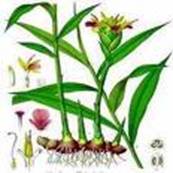
Ginger (Zingiber officinale) is an aromatic perennial herb of the ginger family (Zingiberaceae), grown for its rhizome (underground stem), which has a distinctive fragrance and a sharp, hot taste. It grows in the tropics, up to about 1 m tall, with lance-shaped green leaves and yellow flowers with orange or purple, white-spotted petals. When the leaves begin to wither, the rhizomes are dug up, separated and dried, or boiled until soft, peeled and boiled several times in syrup to preserve them. It is grown in most hot countries, including Jamaica and the West Indies, and is propagated from pieces of rhizome.
Parts used
The rhizome and roots.
Constituents
Ginger contains starch, gums and a volatile oil that gives it its fragrance, containing camphene, linalool, citral and bisabolene, as well as a non-volatile oily resin, gingerol and zingerone, which give it its hot taste. It also contains small amounts of minerals and B vitamins.
Traditional uses
Ginger is traditionally used to aid digestion, ease cramps and wind, stimulate circulation, promote sweating and warmth, and soothe a hoarse voice when taken as an infusion. It is an antioxidant and has antimicrobial properties. It is used in cakes, sweets and fizzy drinks, as a warming winter drink, and chewing it freshens the breath and removes the smell of onion.
There is good evidence that ginger helps nausea, including morning sickness in pregnancy and motion sickness, and it may ease period pain and the pain of osteoarthritis a little.
Traditionally, ginger is also considered an aphrodisiac (with galangal, peanuts and honey), and in some regions ginger powder mixed with honey is rubbed on the skin and joints of women in the forty days after childbirth.
Caution: large amounts can upset the stomach and cause heartburn. Ginger may increase the risk of bleeding in people taking blood thinners such as warfarin, so check with a doctor or pharmacist. In pregnancy, use only modest food amounts and ask your midwife or doctor about supplements. Never put ginger preparations in the eyes.
By Dr Elias Jabbour

Like

Love

Angry

Dislike